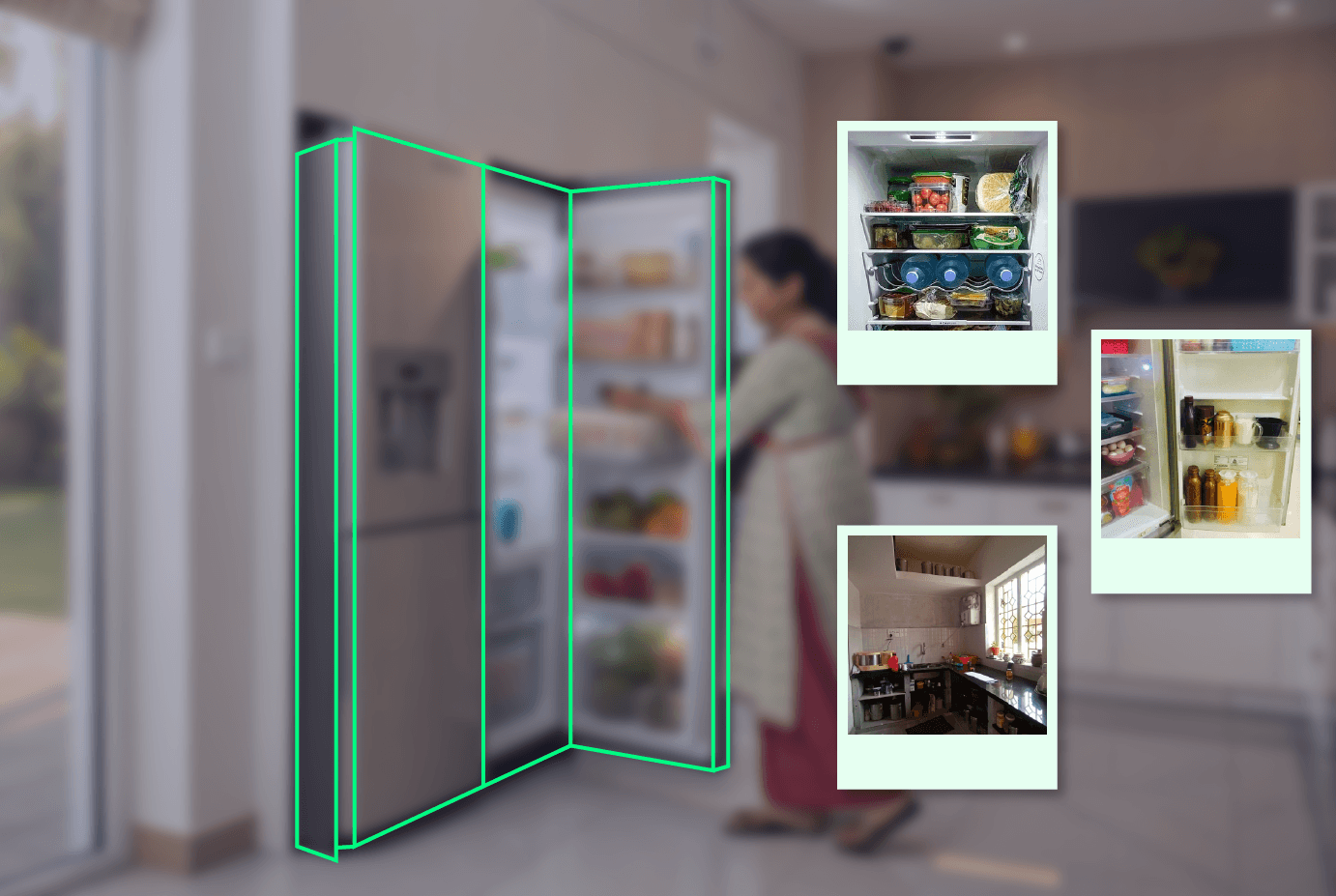
A global home appliance company approached us to identify three low-cost, high-impact features for their premium Side-by-Side refrigerators, specifically tailored to the Indian market.
My Impact ✨
Industry
Consumer Electronics
Duration
4 months
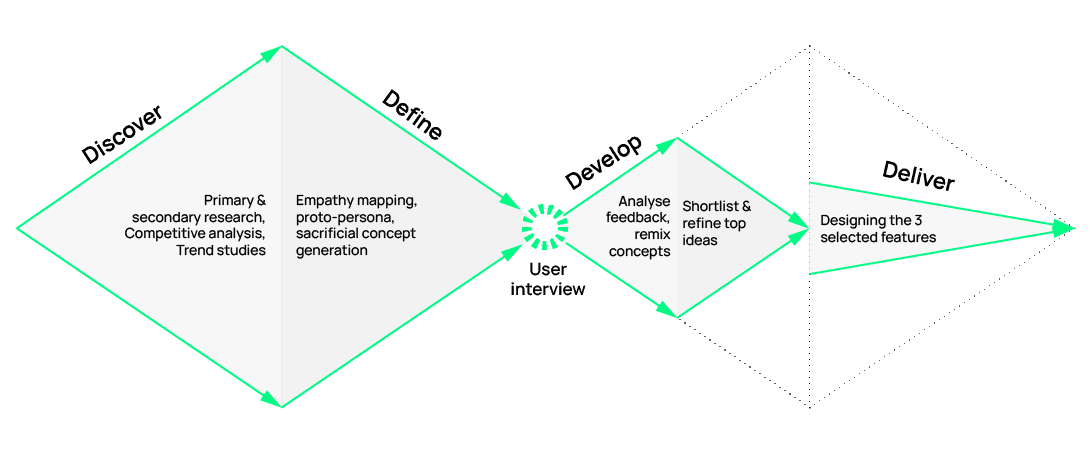
We followed an Adapted Double Diamond framework enriched with Lean UX elements to balance structured exploration with rapid feedback loops. This allowed us to move quickly from research to concept validation while ensuring ideas were grounded in real user needs.
Stage 1. Discovery
We set out to understand consumer behaviour, product gaps, and lifestyle needs in the premium refrigerator in India.
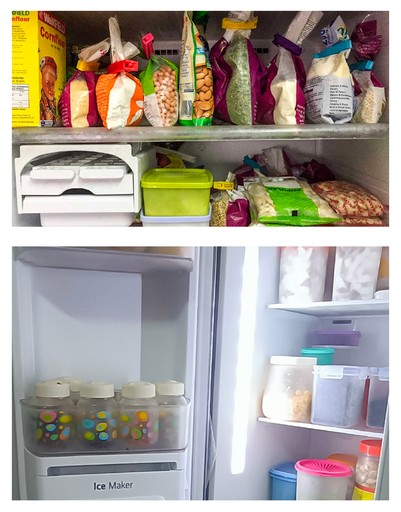
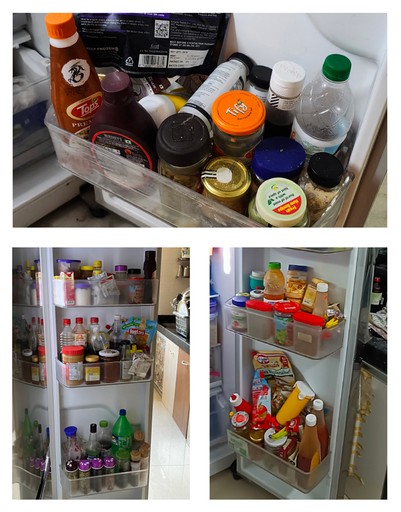
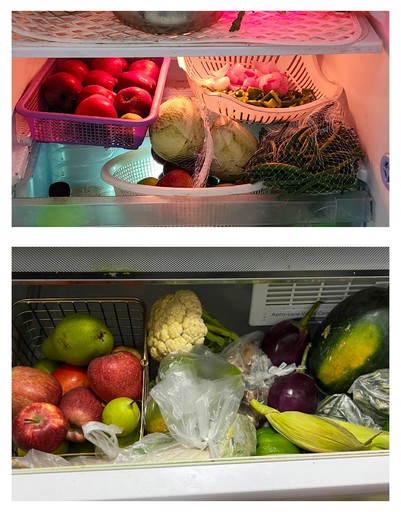
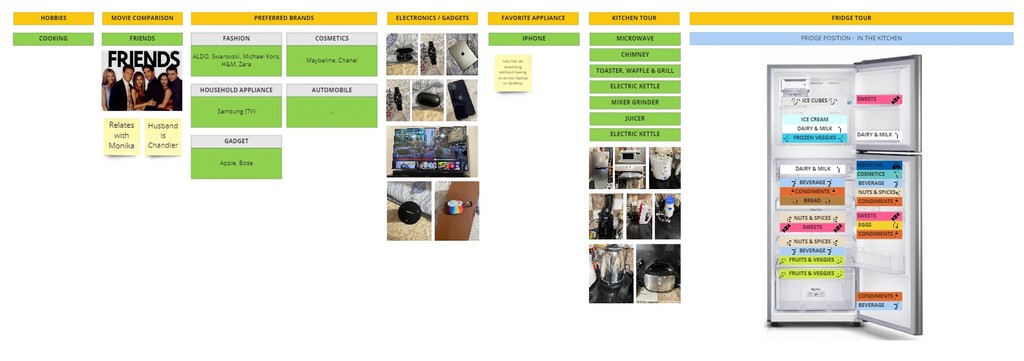
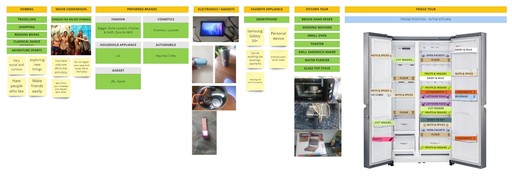
Stage 2. Define
Turning Research into Clear Opportunity Areas — The focus at this stage was to quickly distill insights and uncover potential directions for concept development.
Empathy maps and proto-personas helped align the team and stakeholders around the real user needs and opportunities.
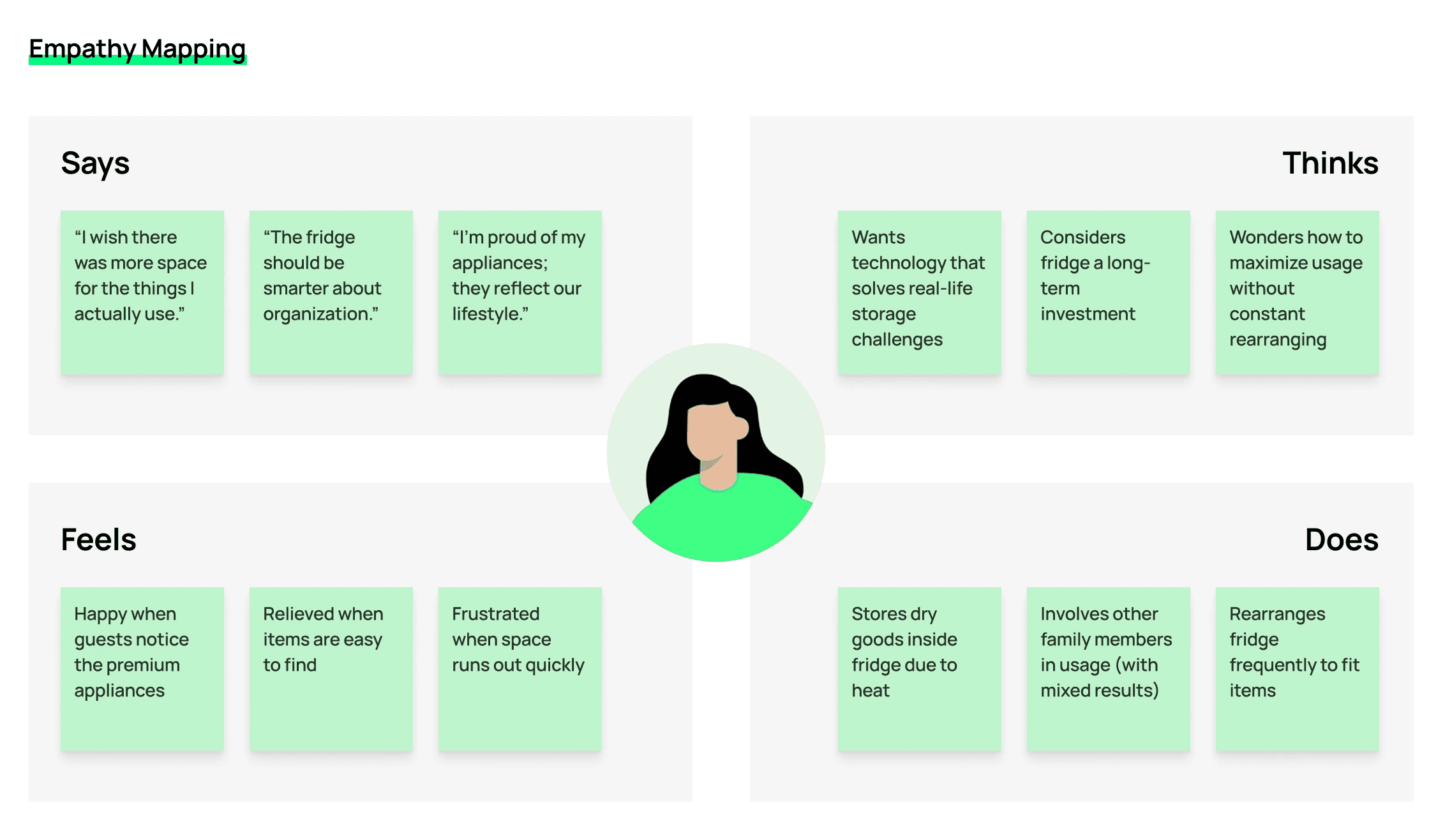
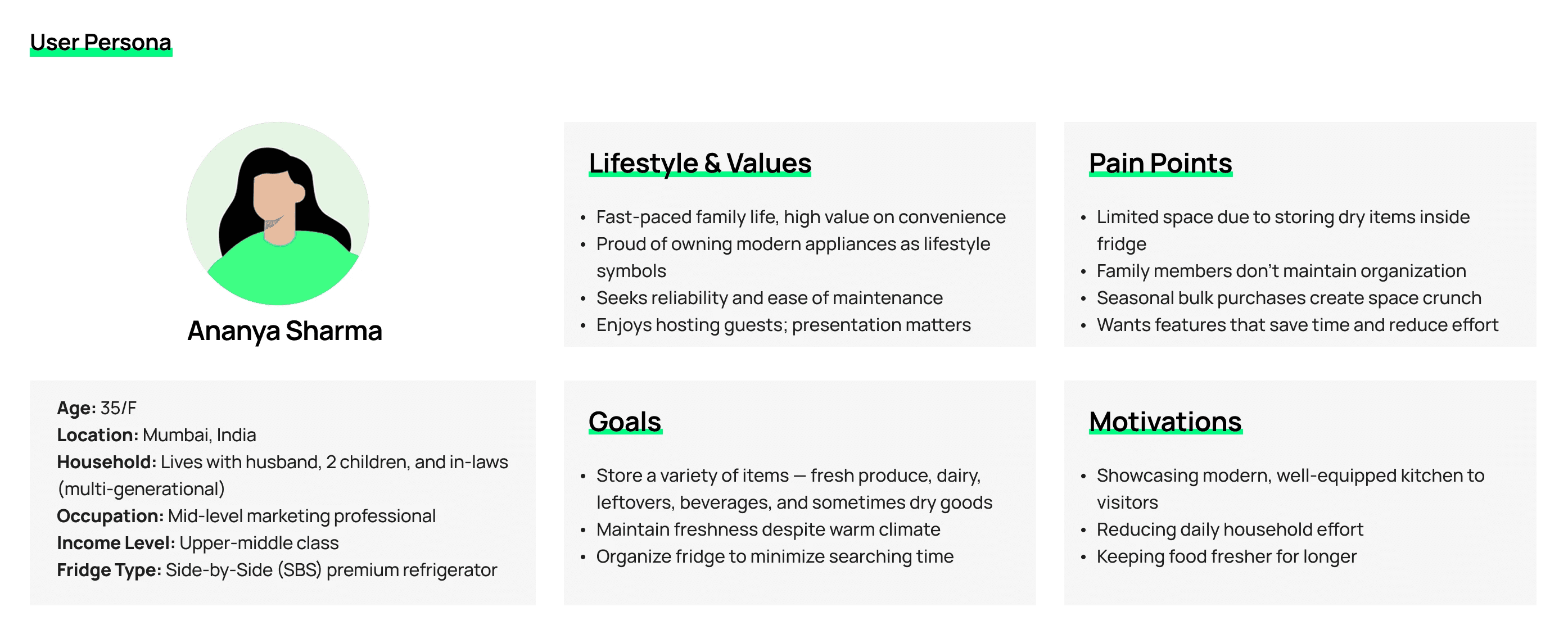
Key Insights that informed the creation of opportunity areas.
Convenience is king

Fast-paced lives demand fridges that simplify routines
Climate shapes storage

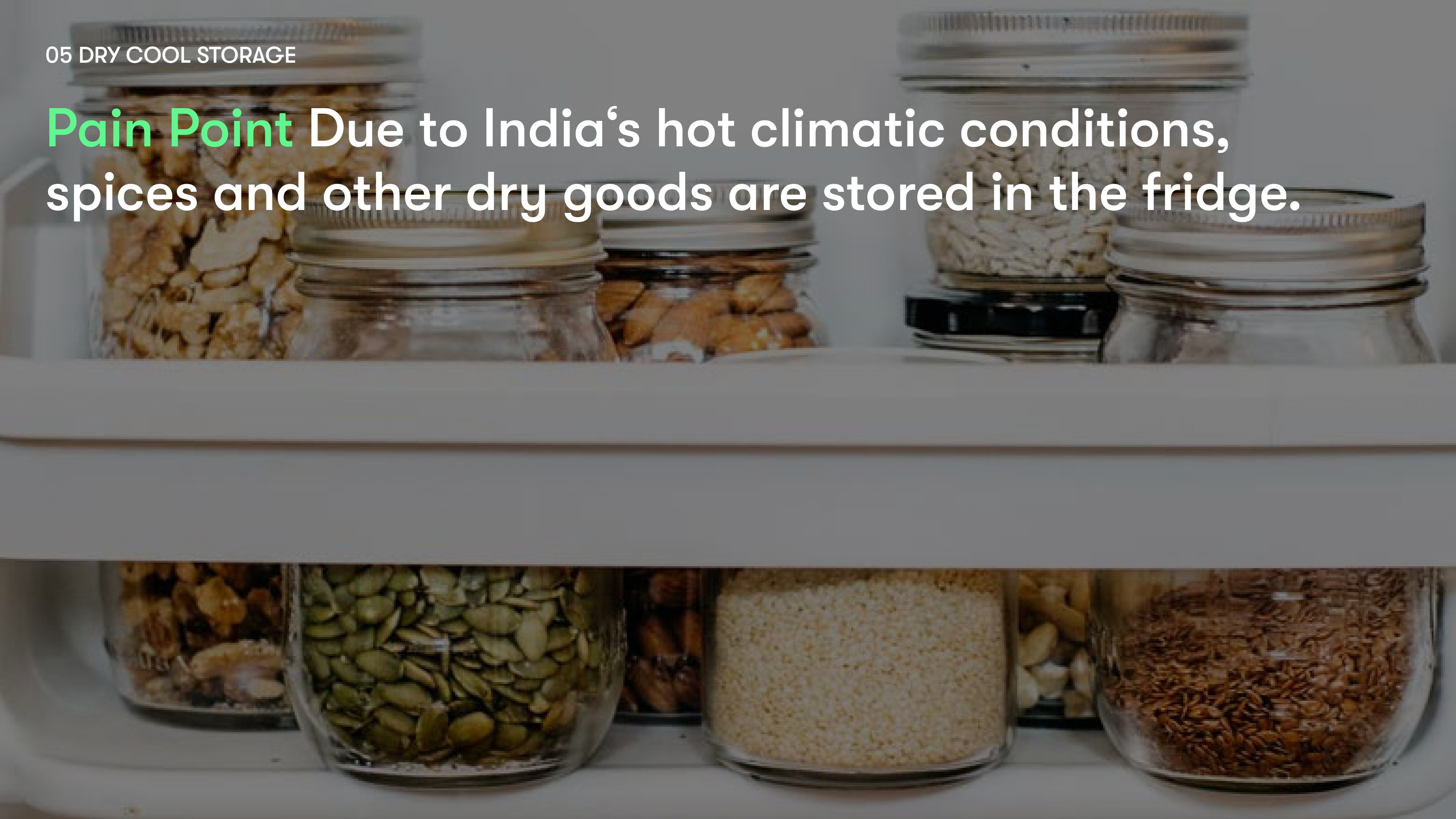
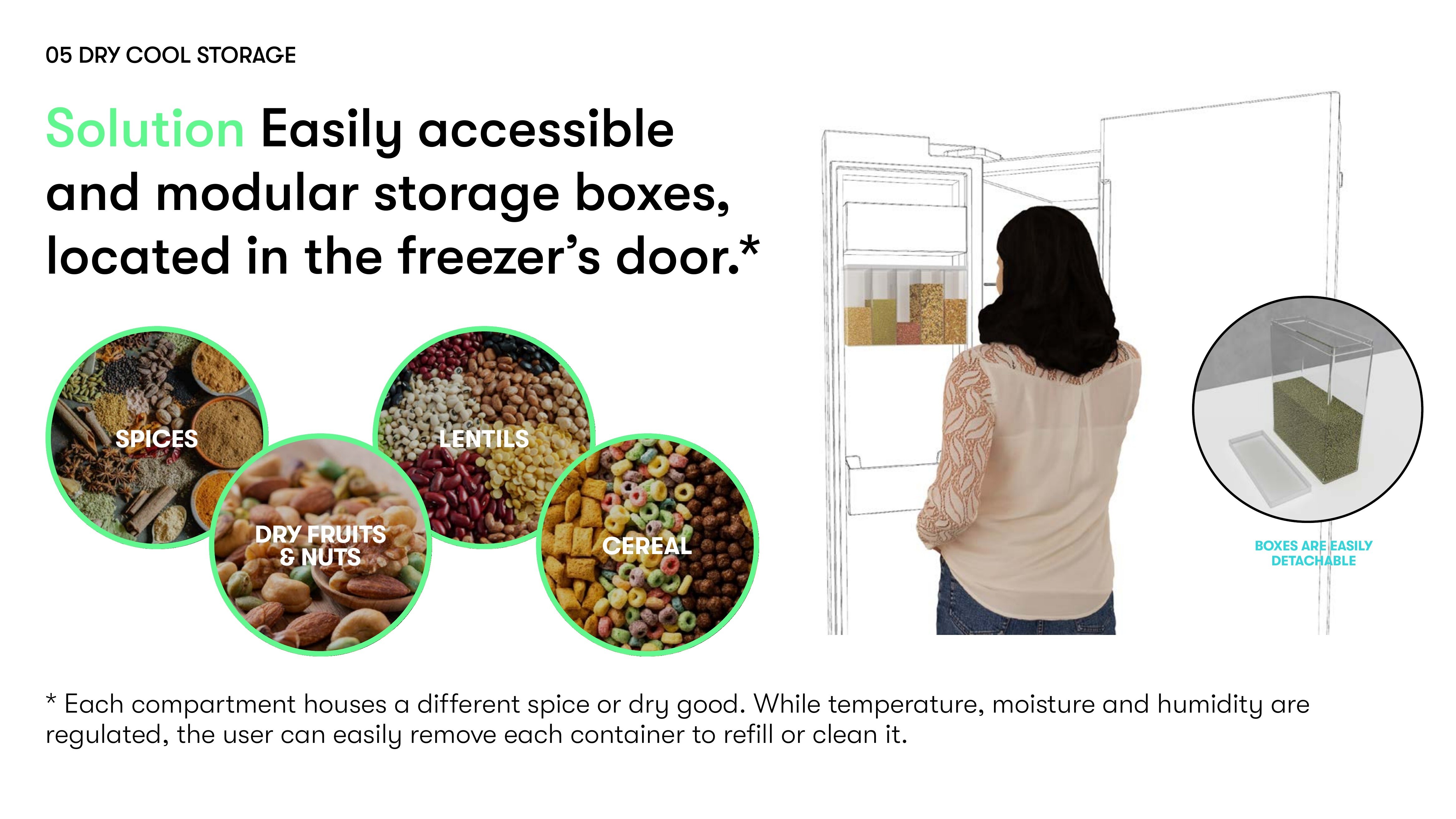
Heat makes even dry goods fridge-dependent, increasing space needs
A statement product

Fridges are lifestyle symbols; owners are proud to showcase them
Primarily millennial households, often spanning three generations under one roof

Family-centric living shapes fridge use, storage needs, and purchase priorities

Aspirational mindset – even modest homes feature the latest appliances

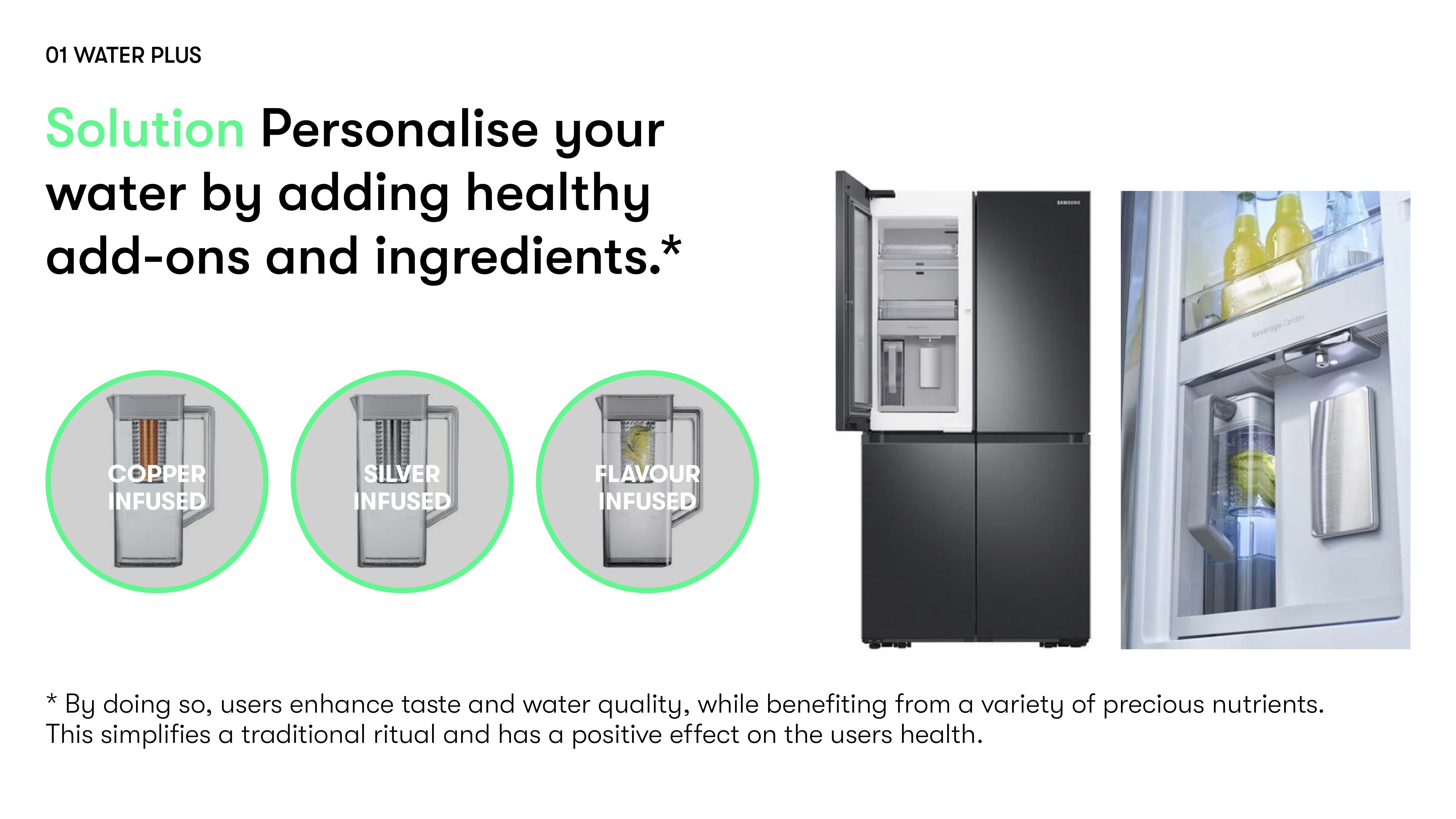
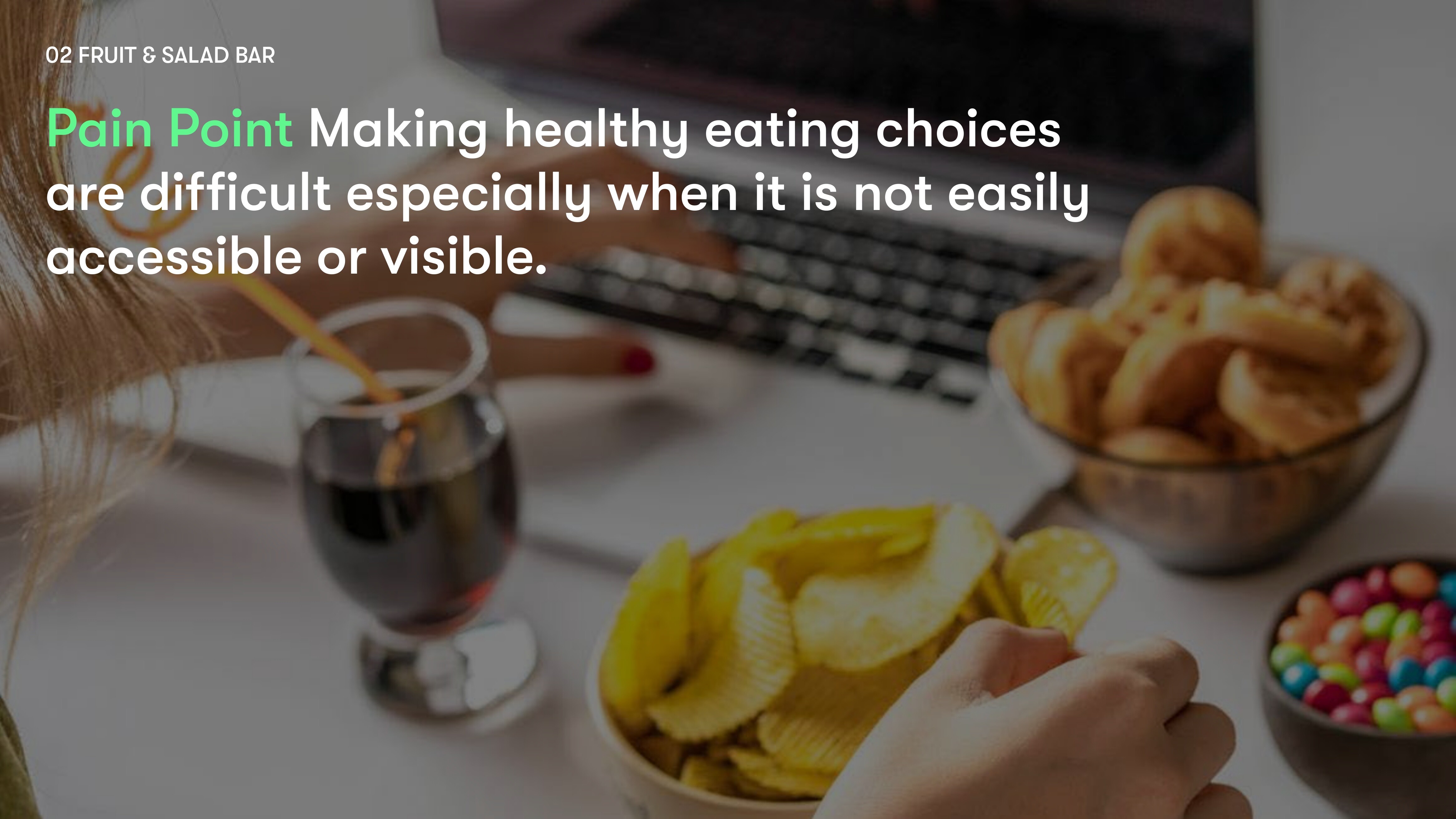
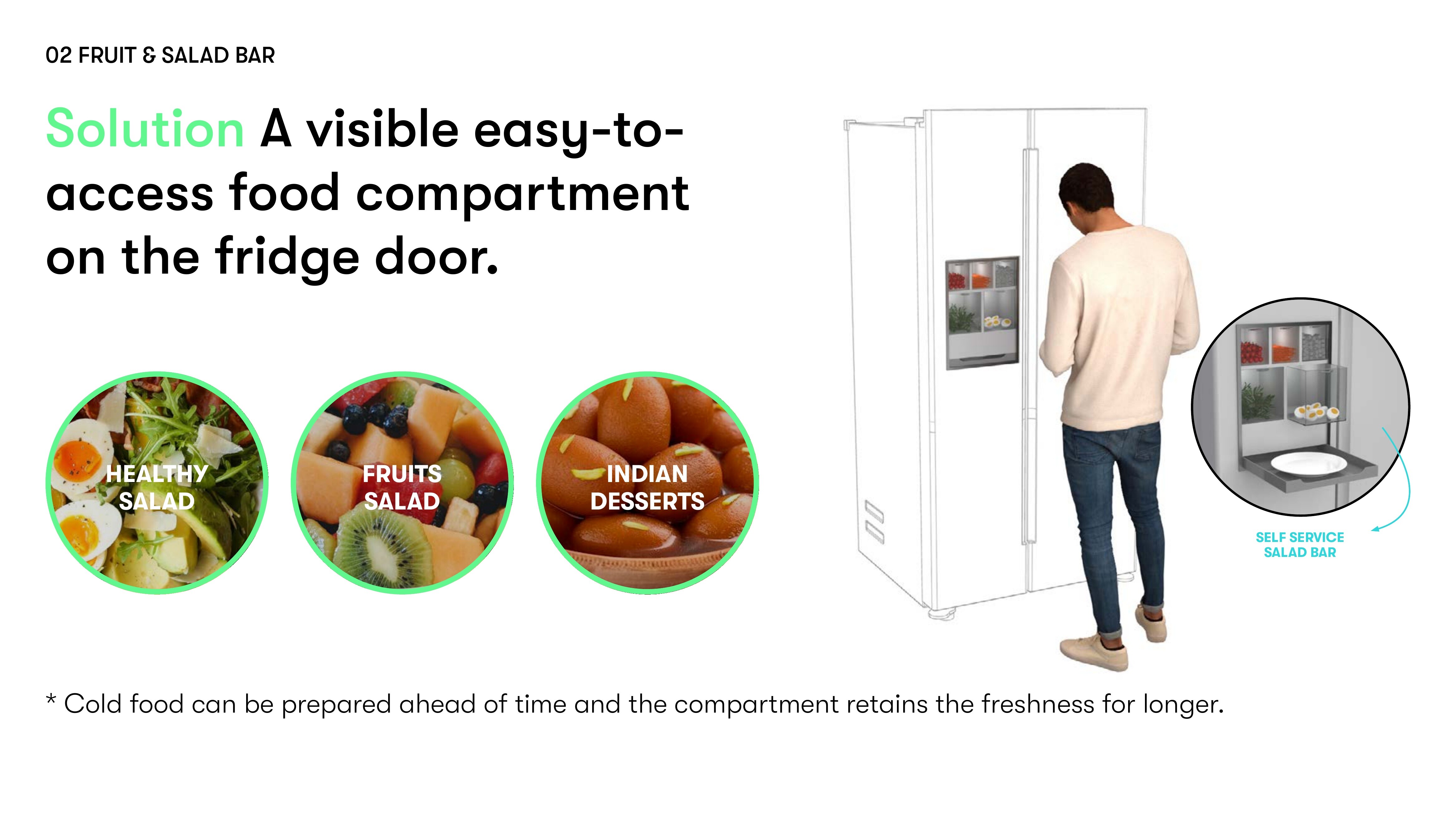
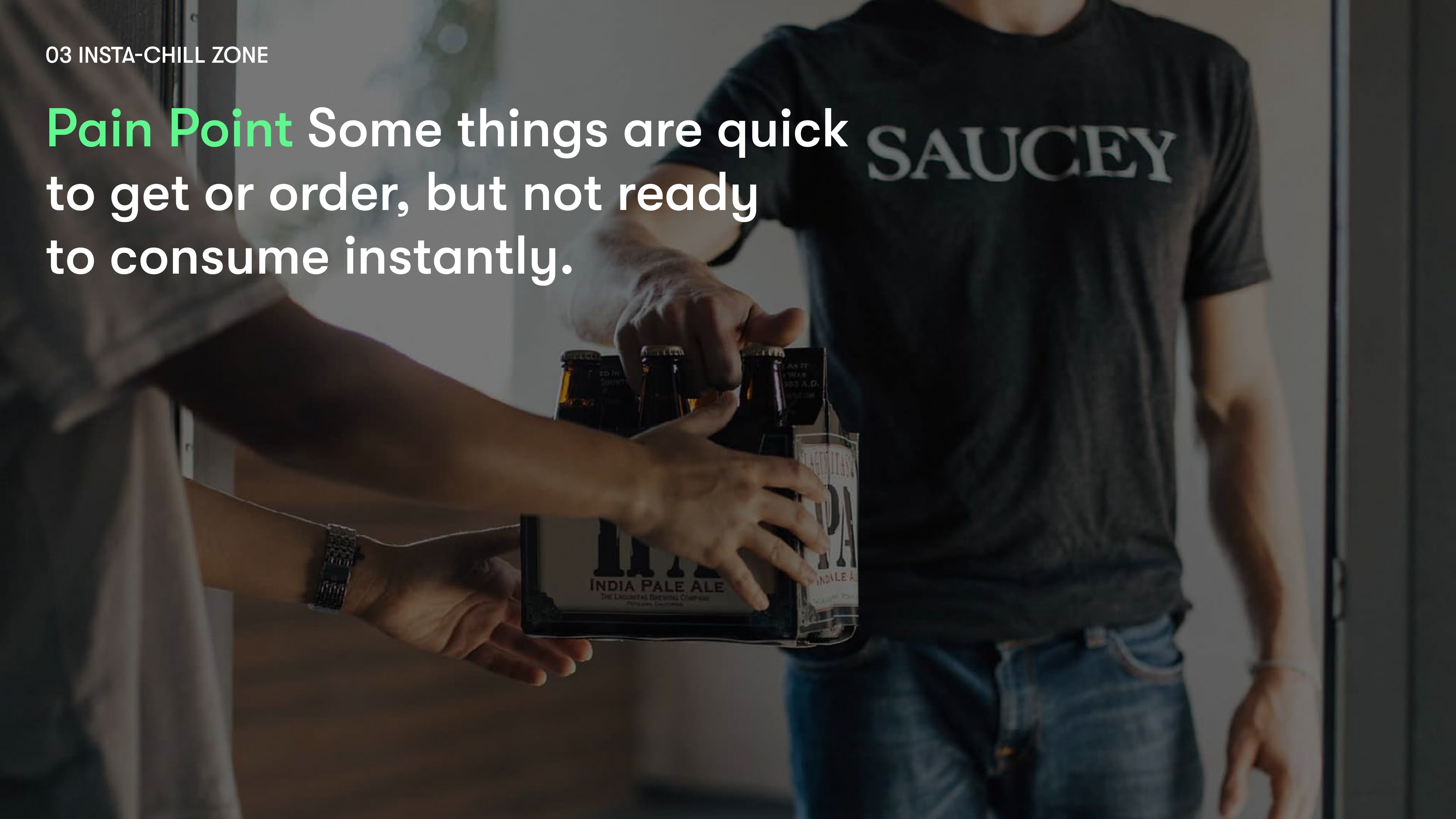
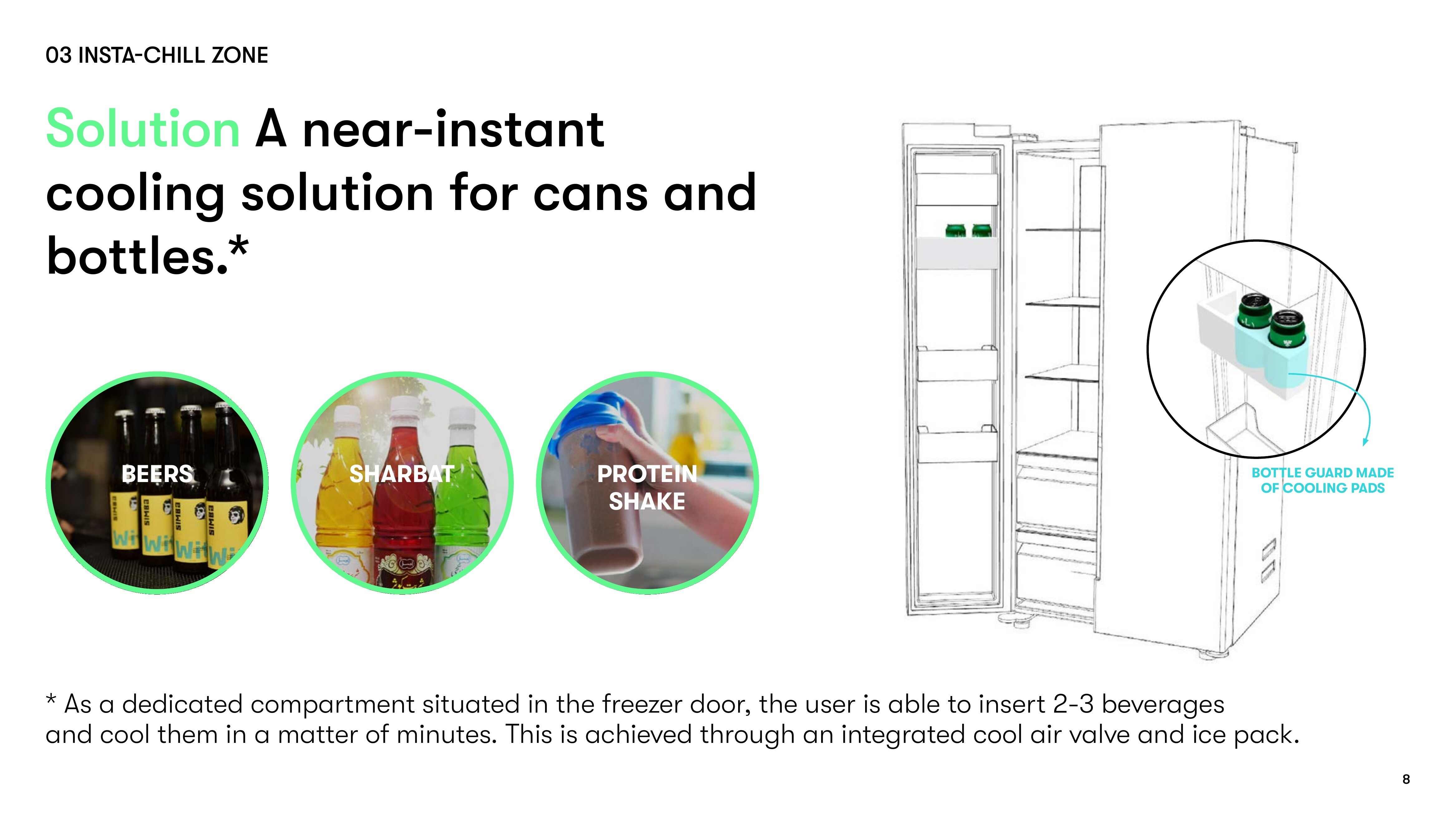
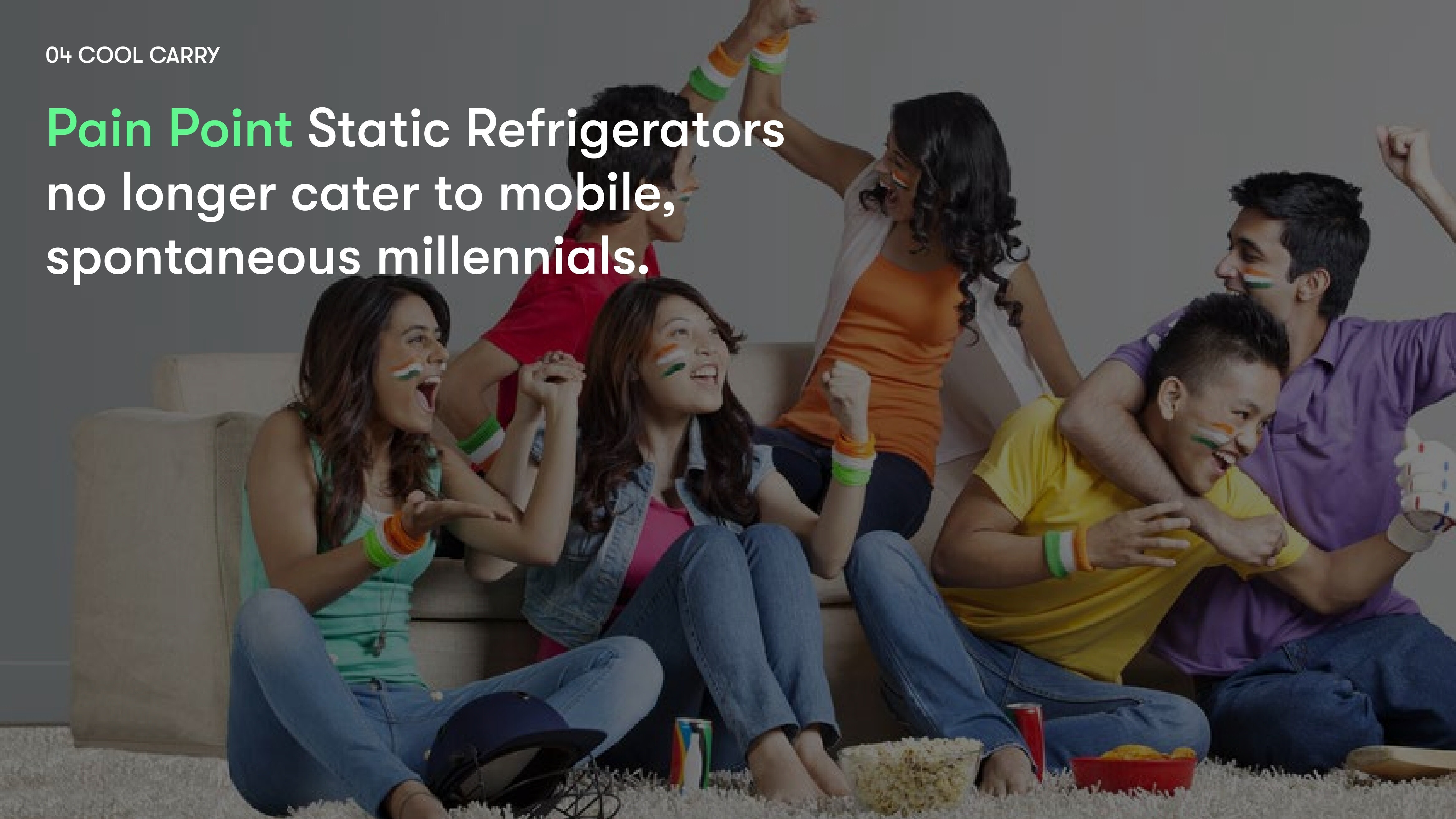
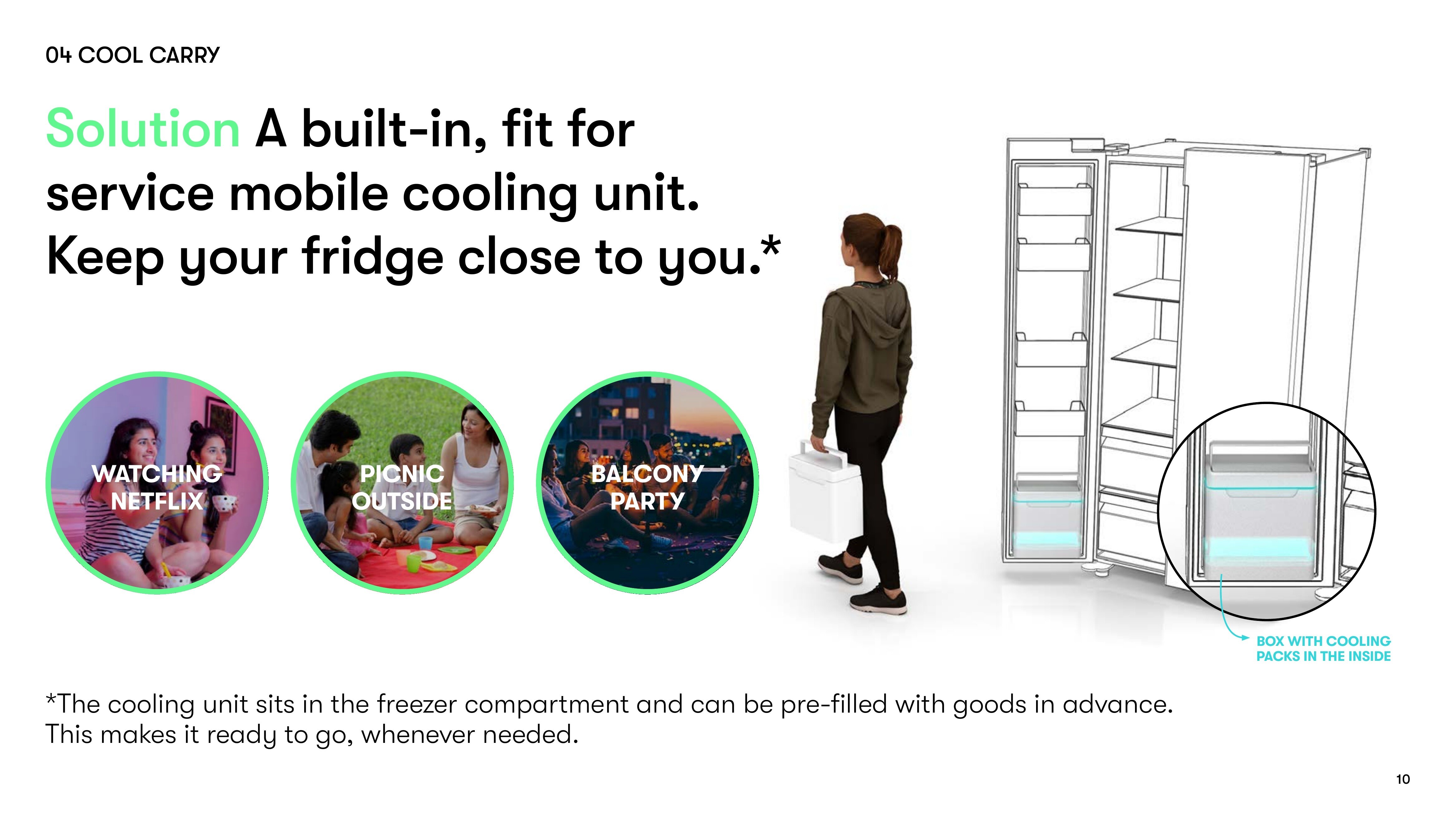
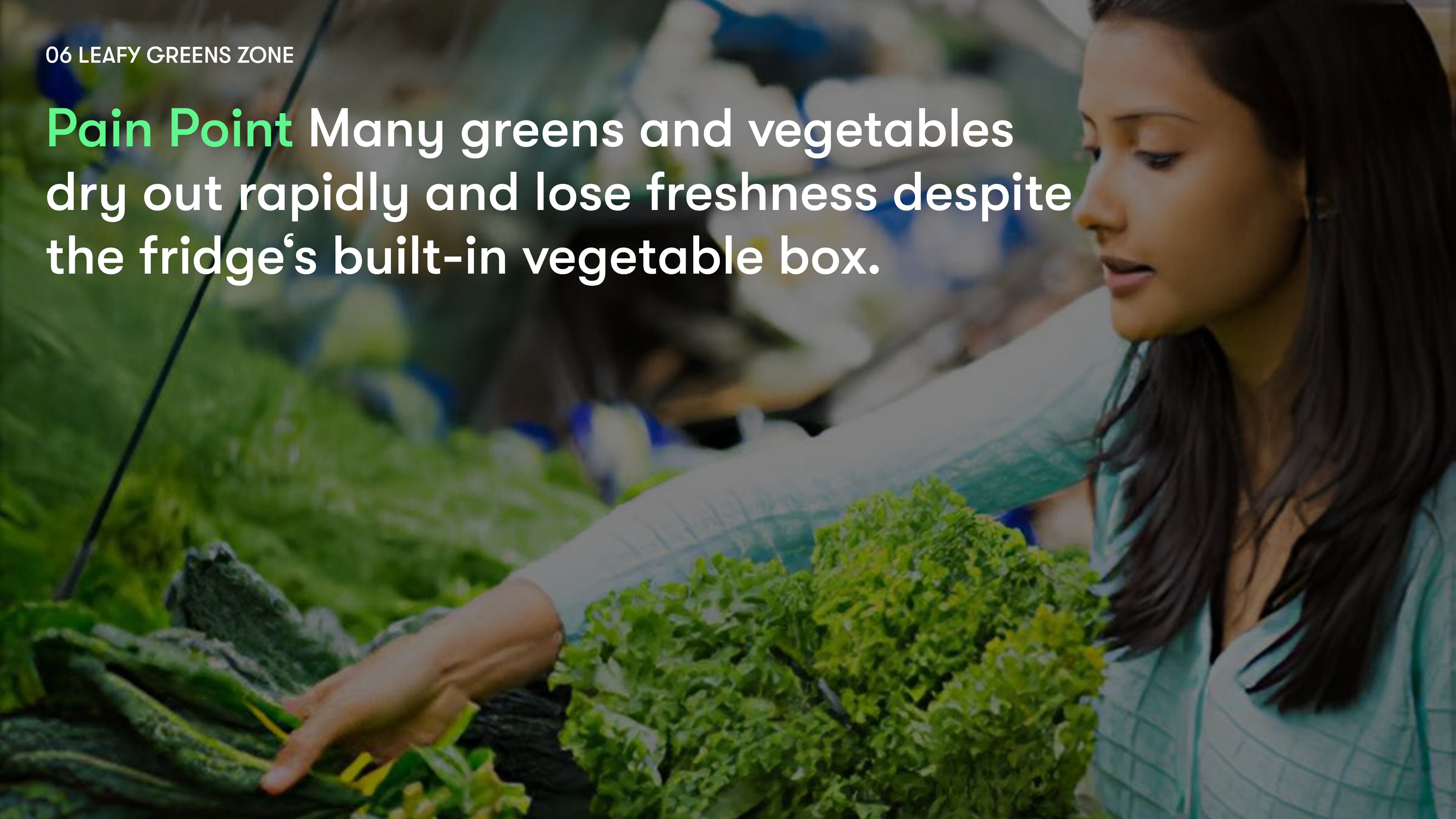
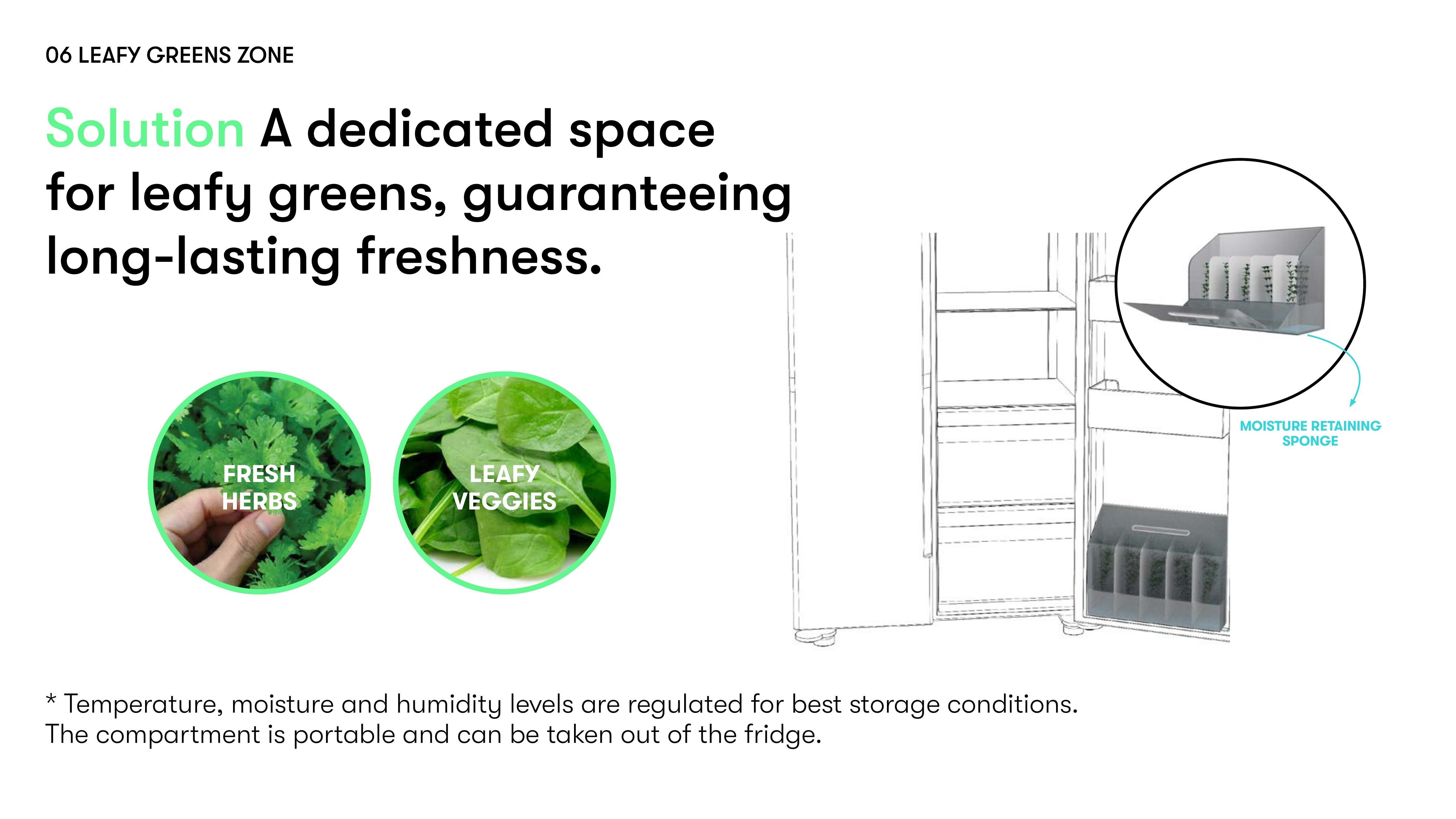
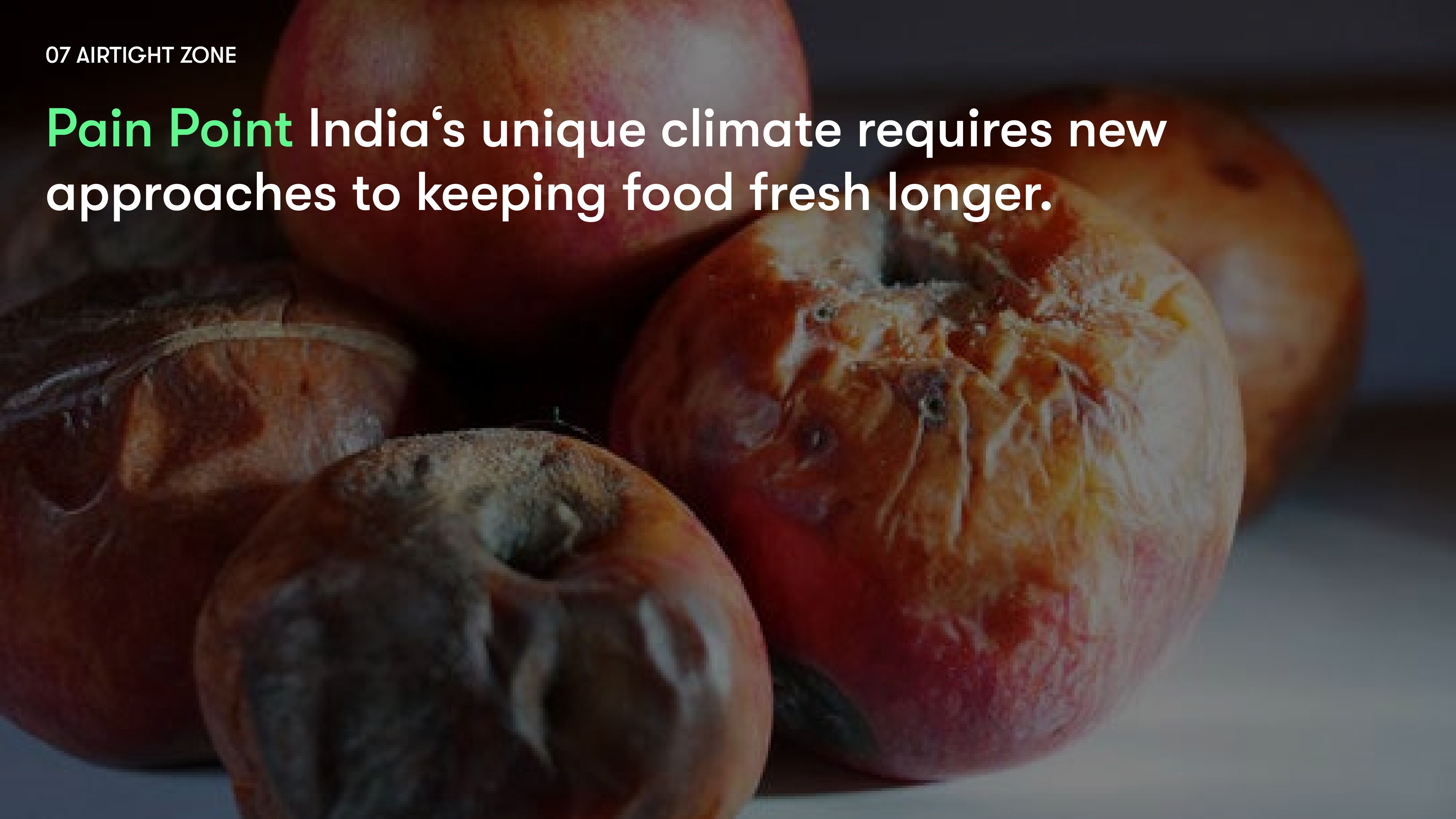
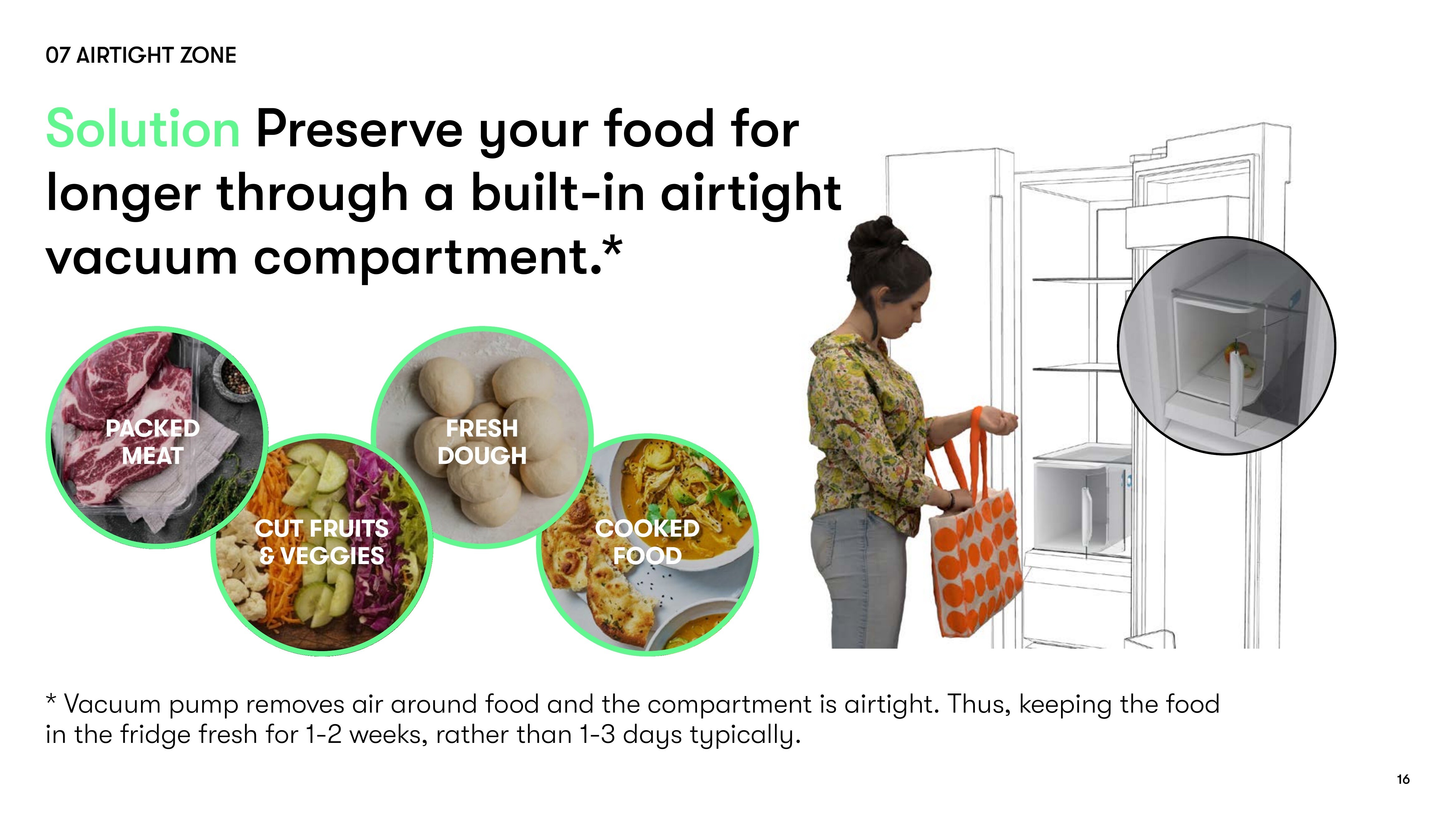
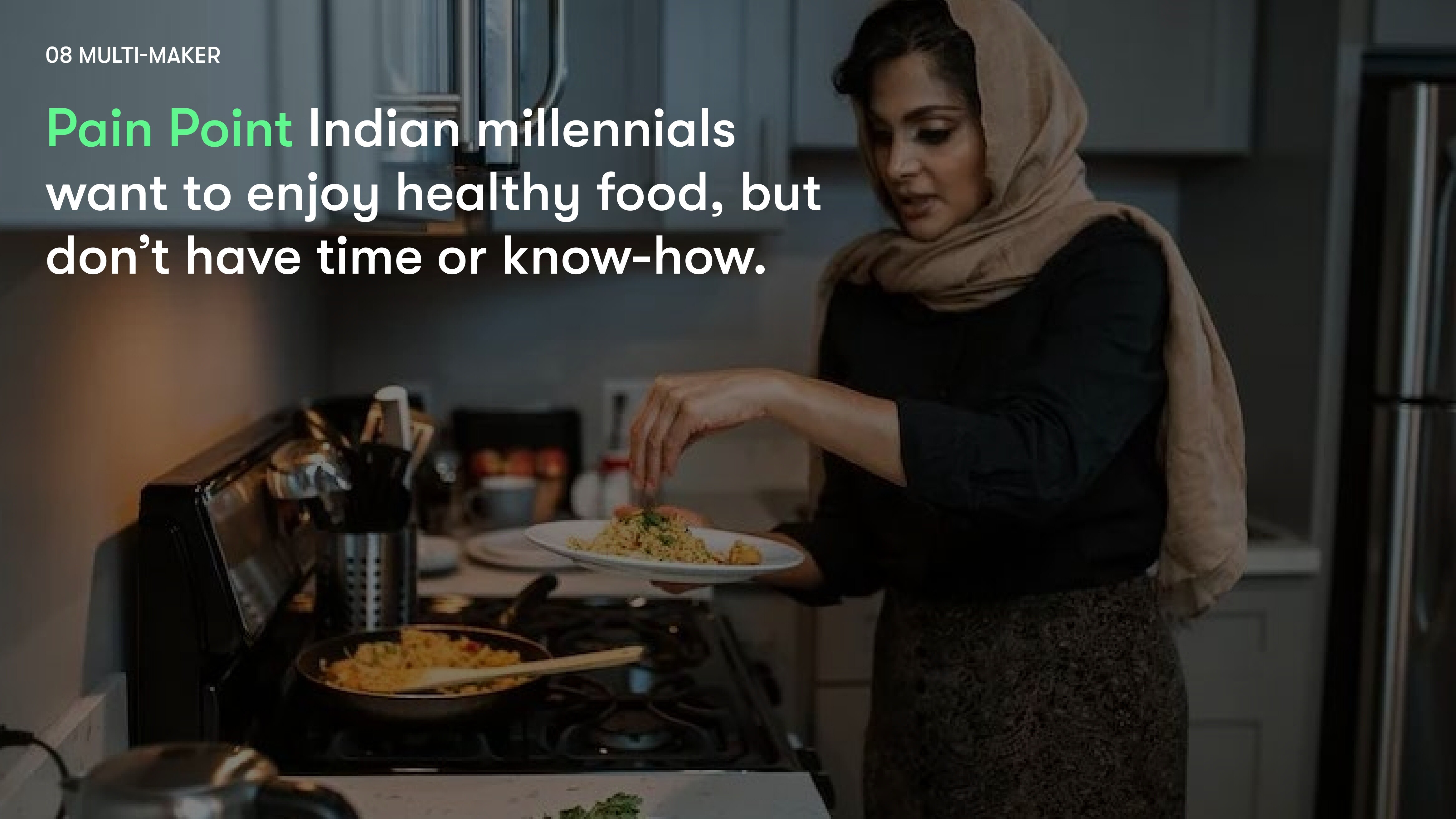
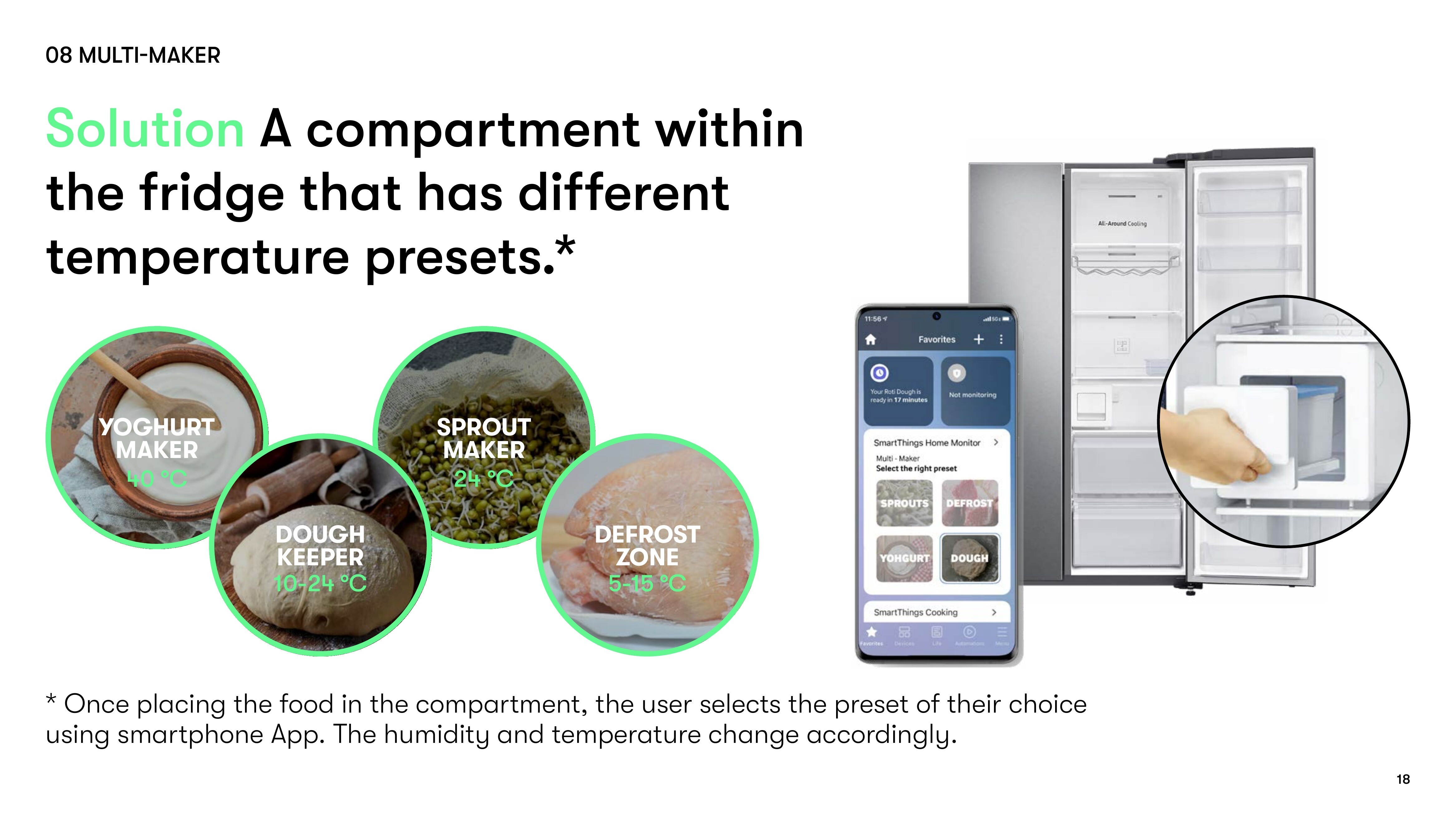
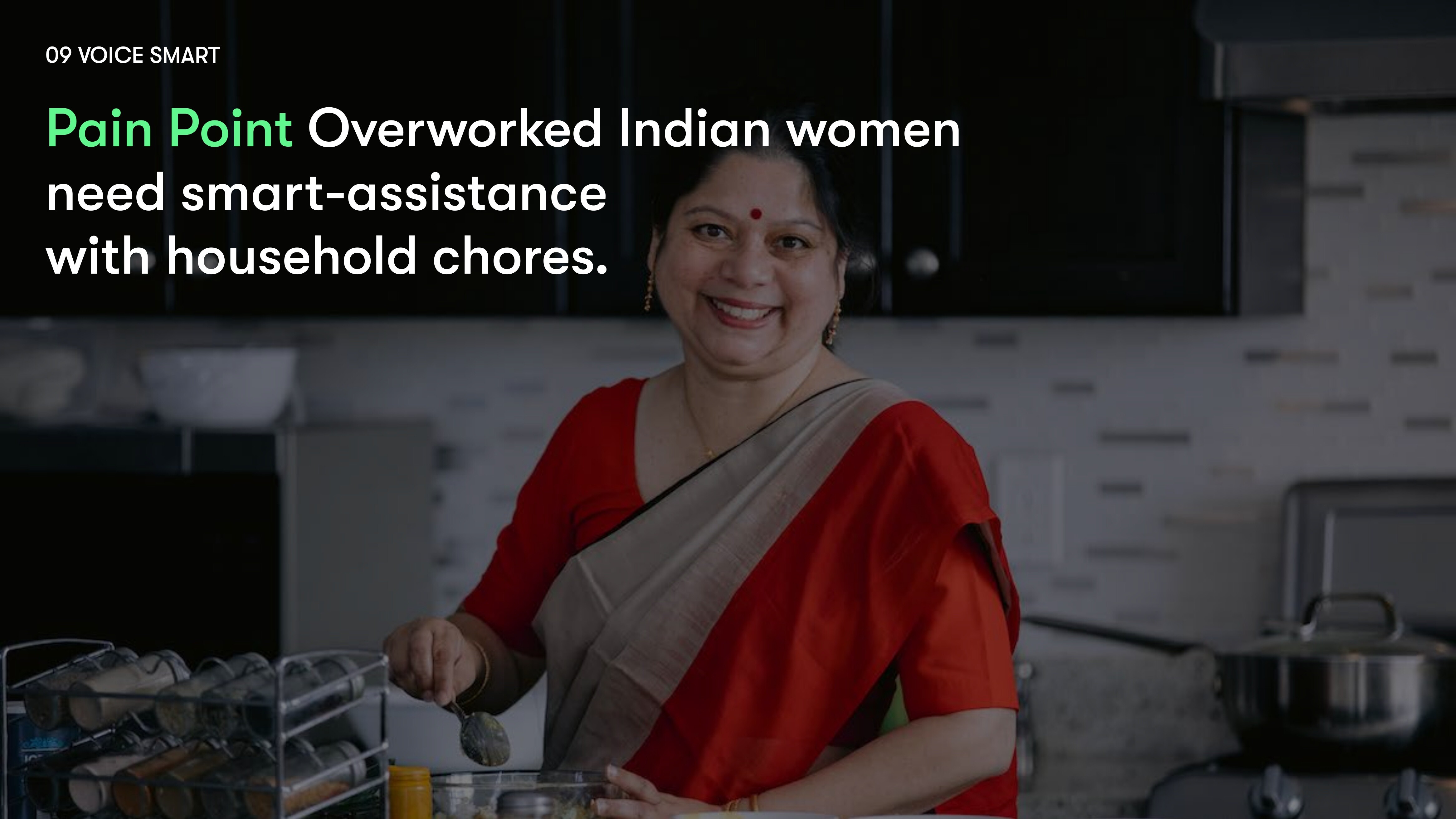
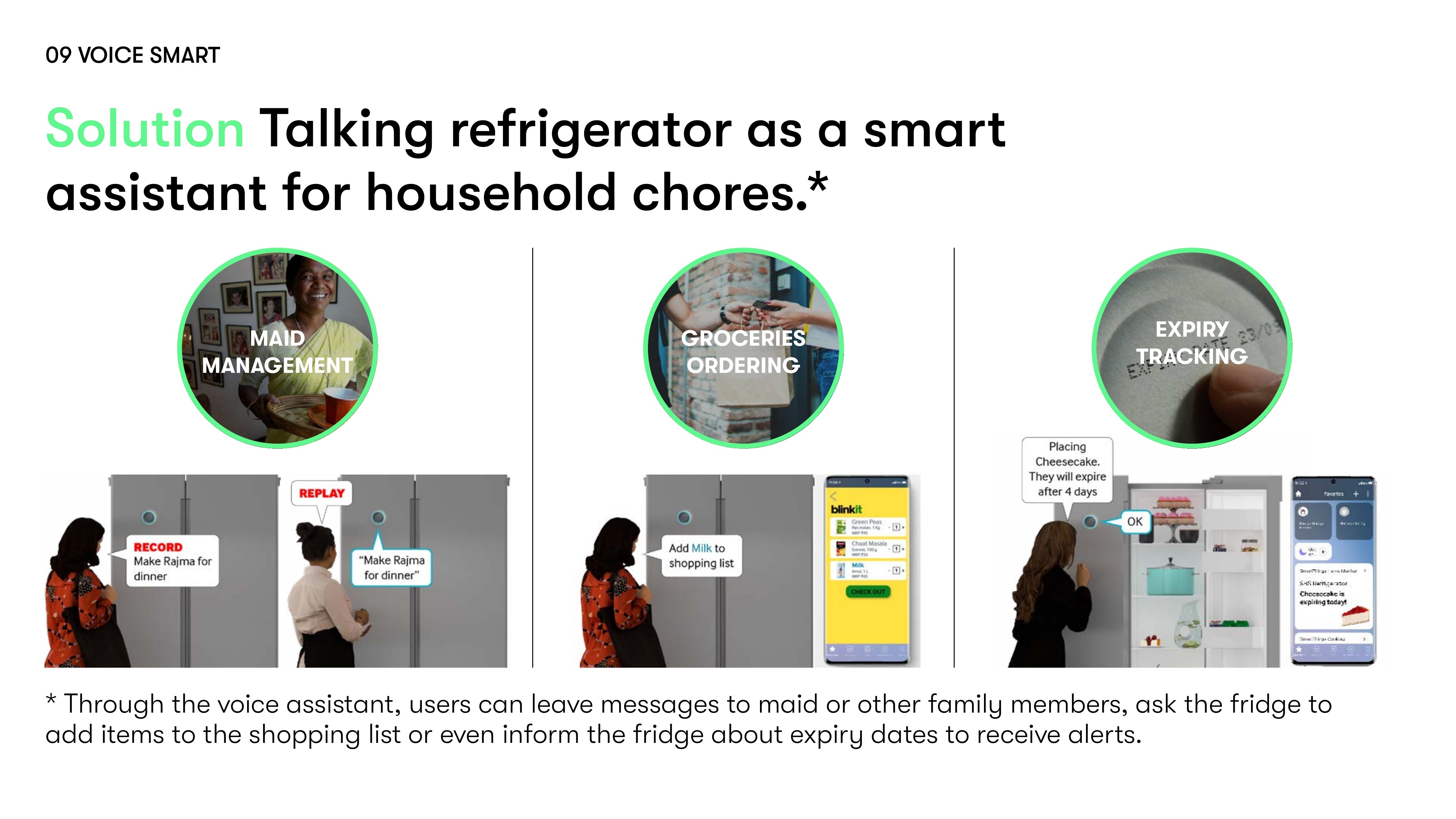
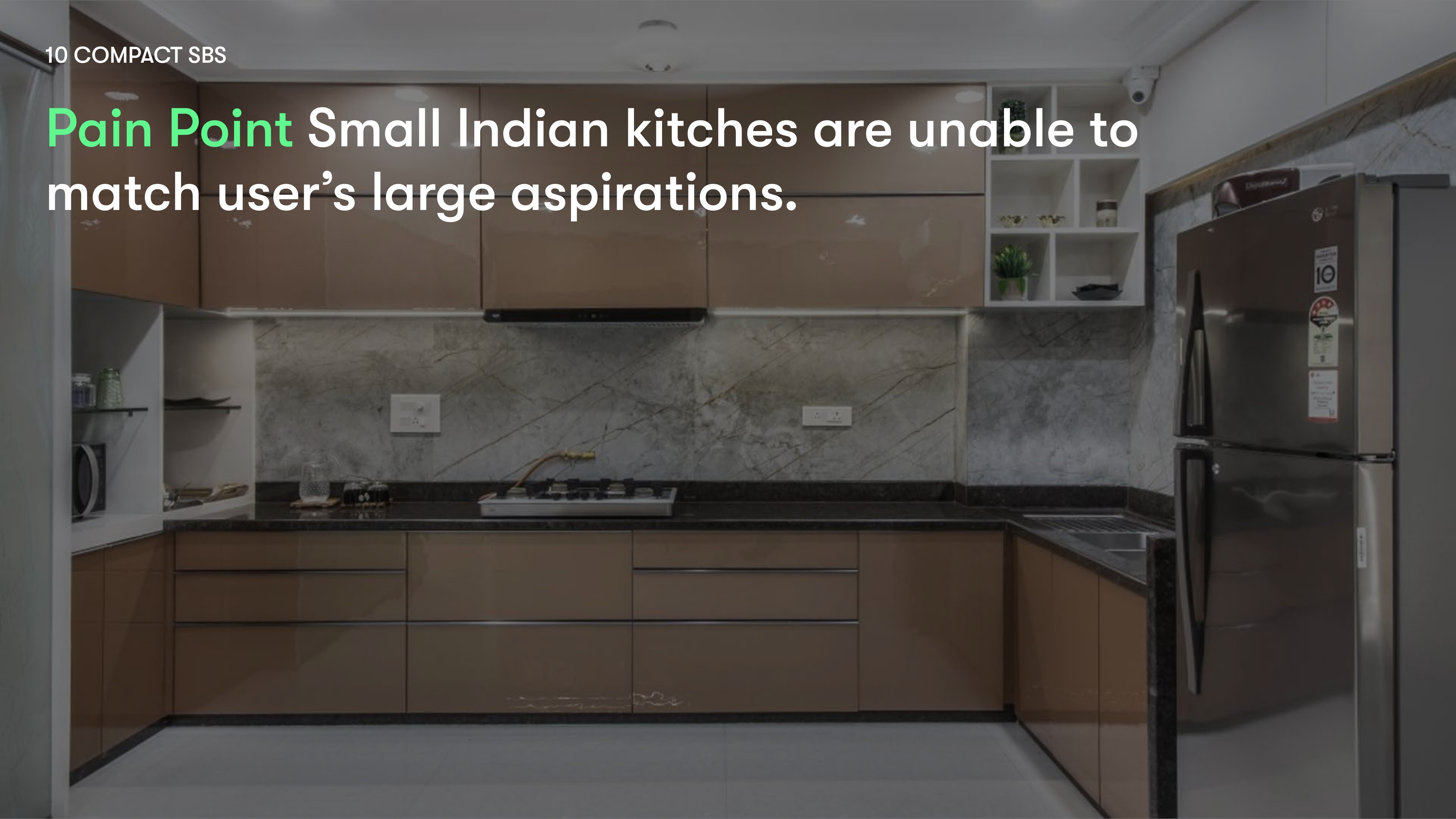
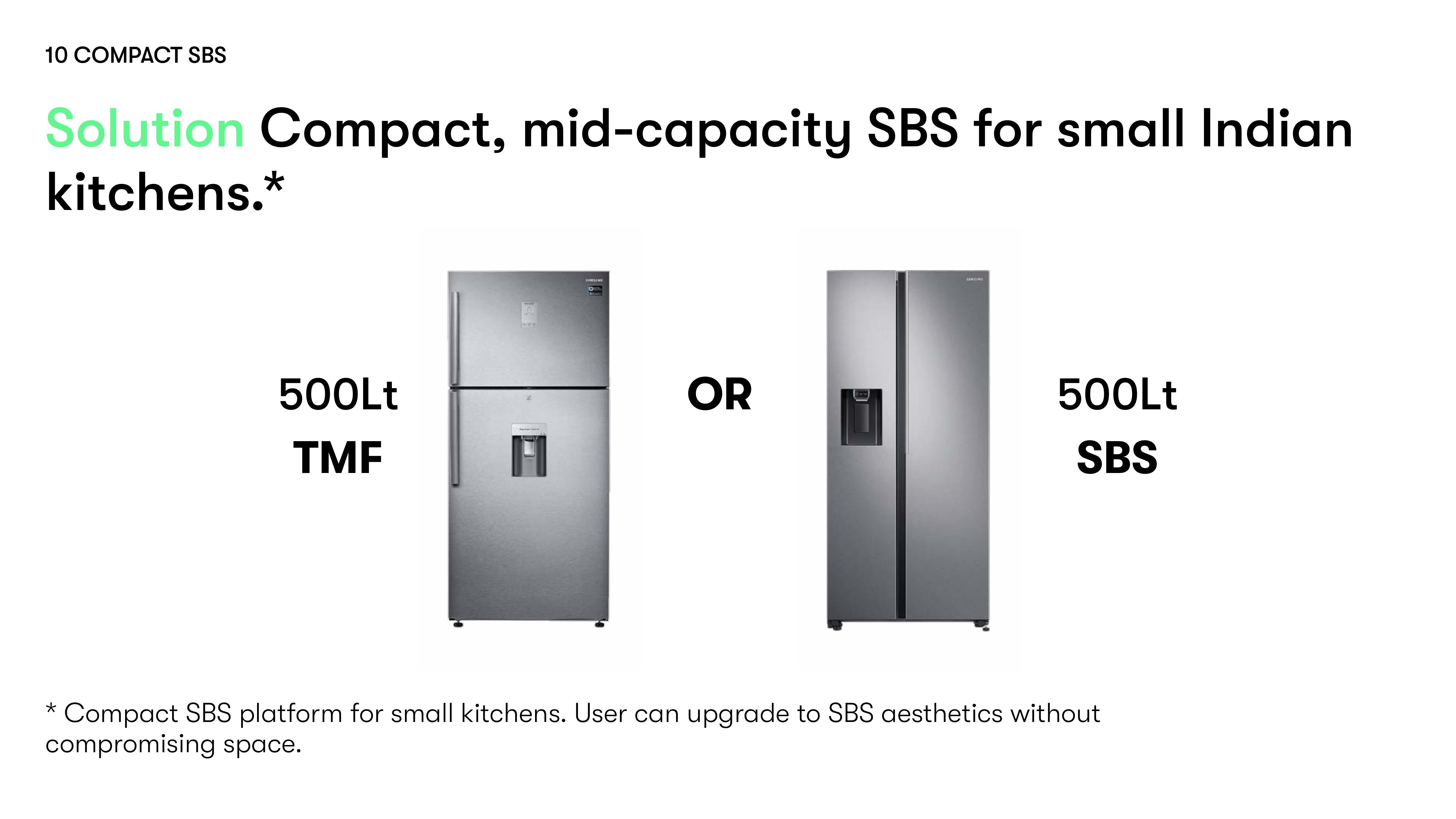
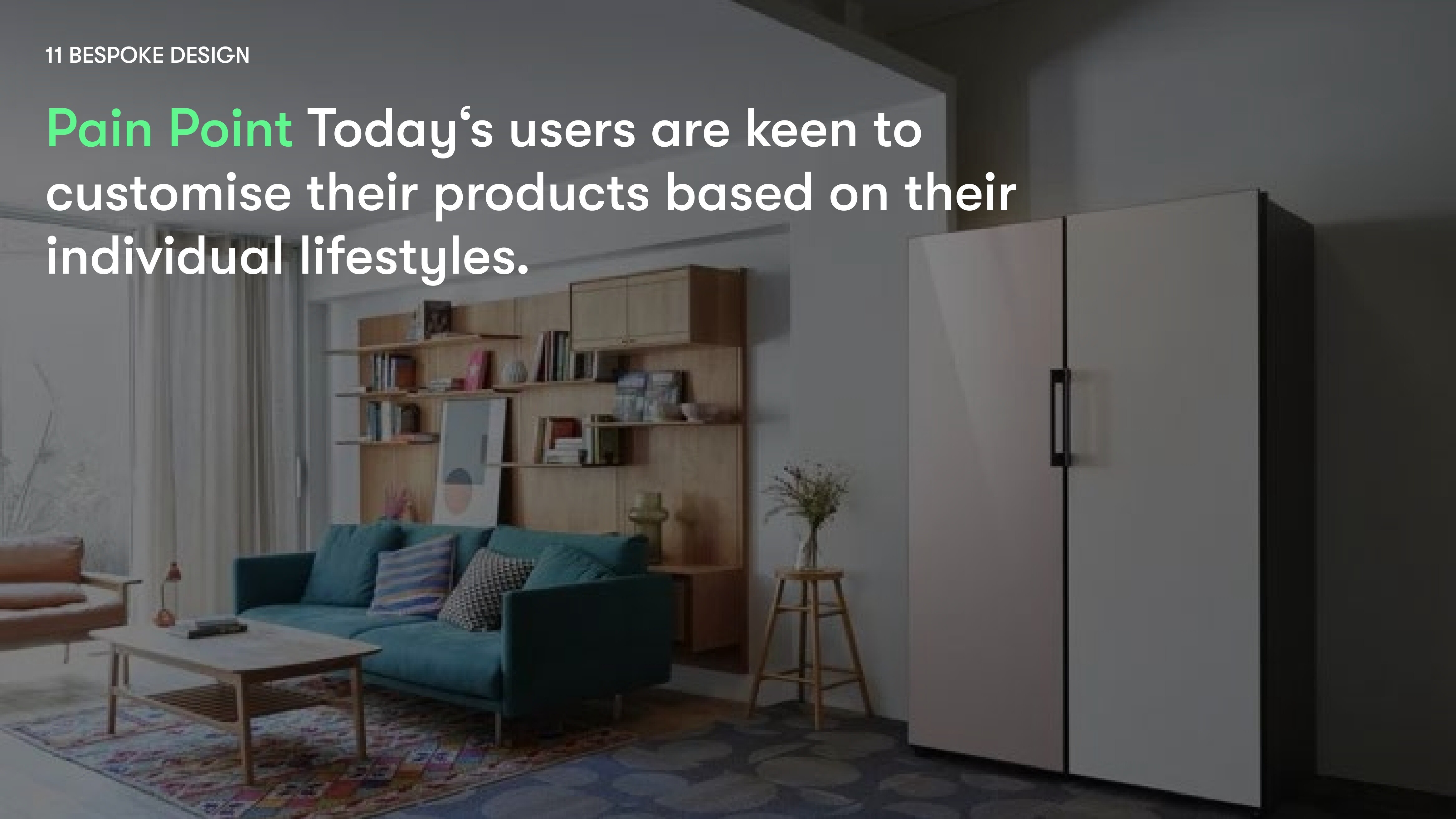
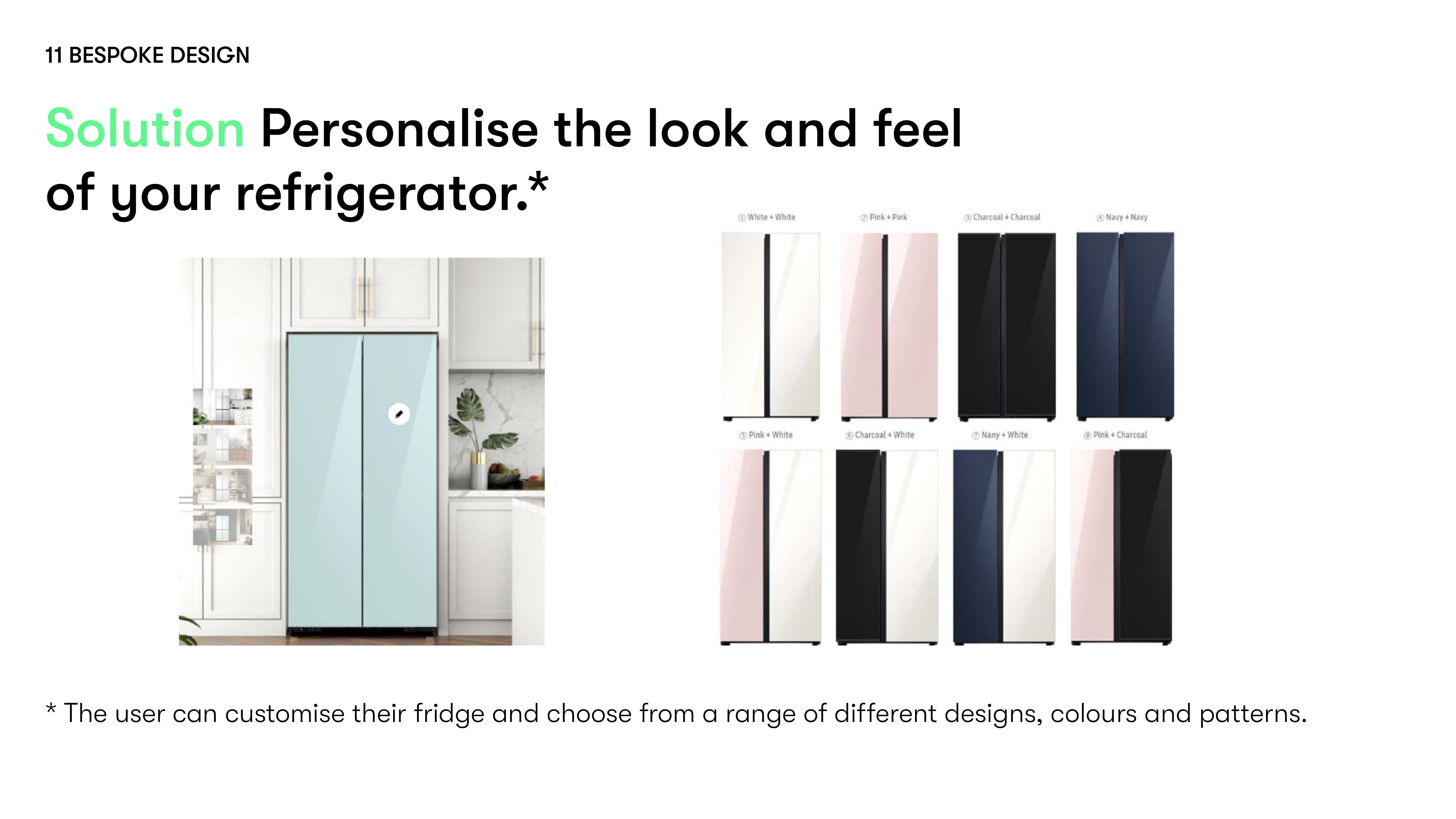
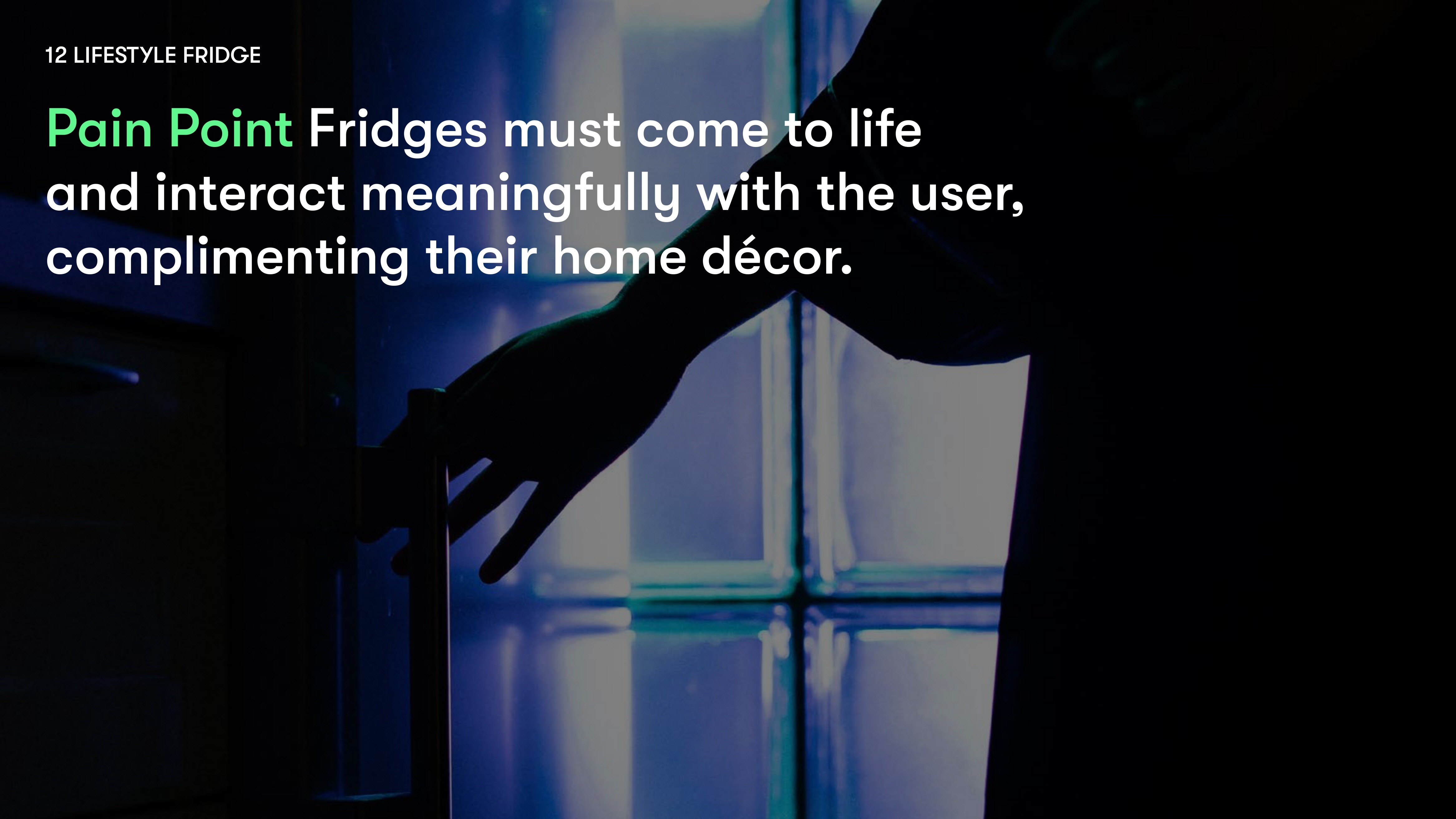
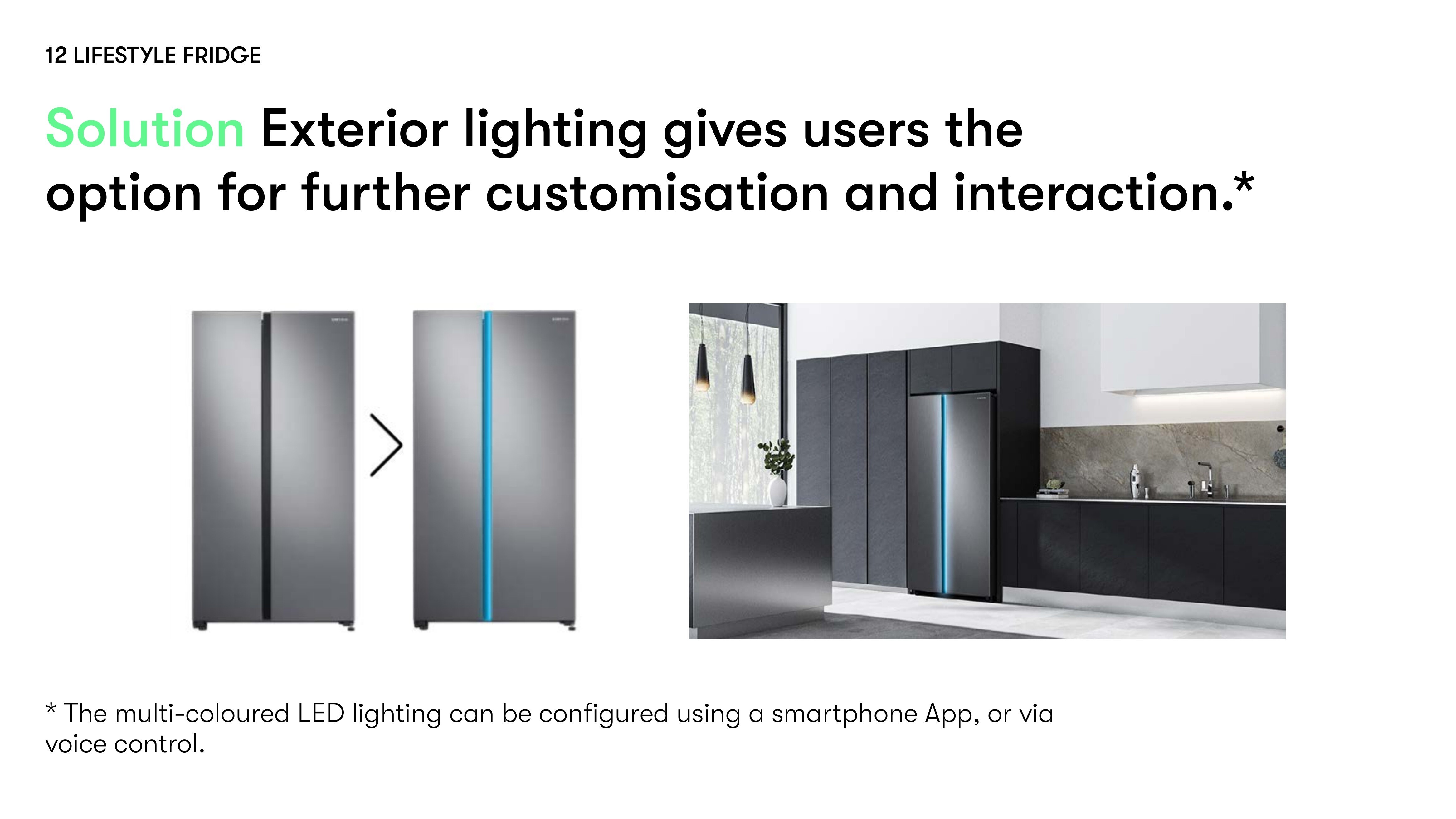
12 feature concepts were developed to show a select number of users to challenge assumptions and spark meaningful reactions in the in-person moderated interviews.

Mid Phase. User Interviews
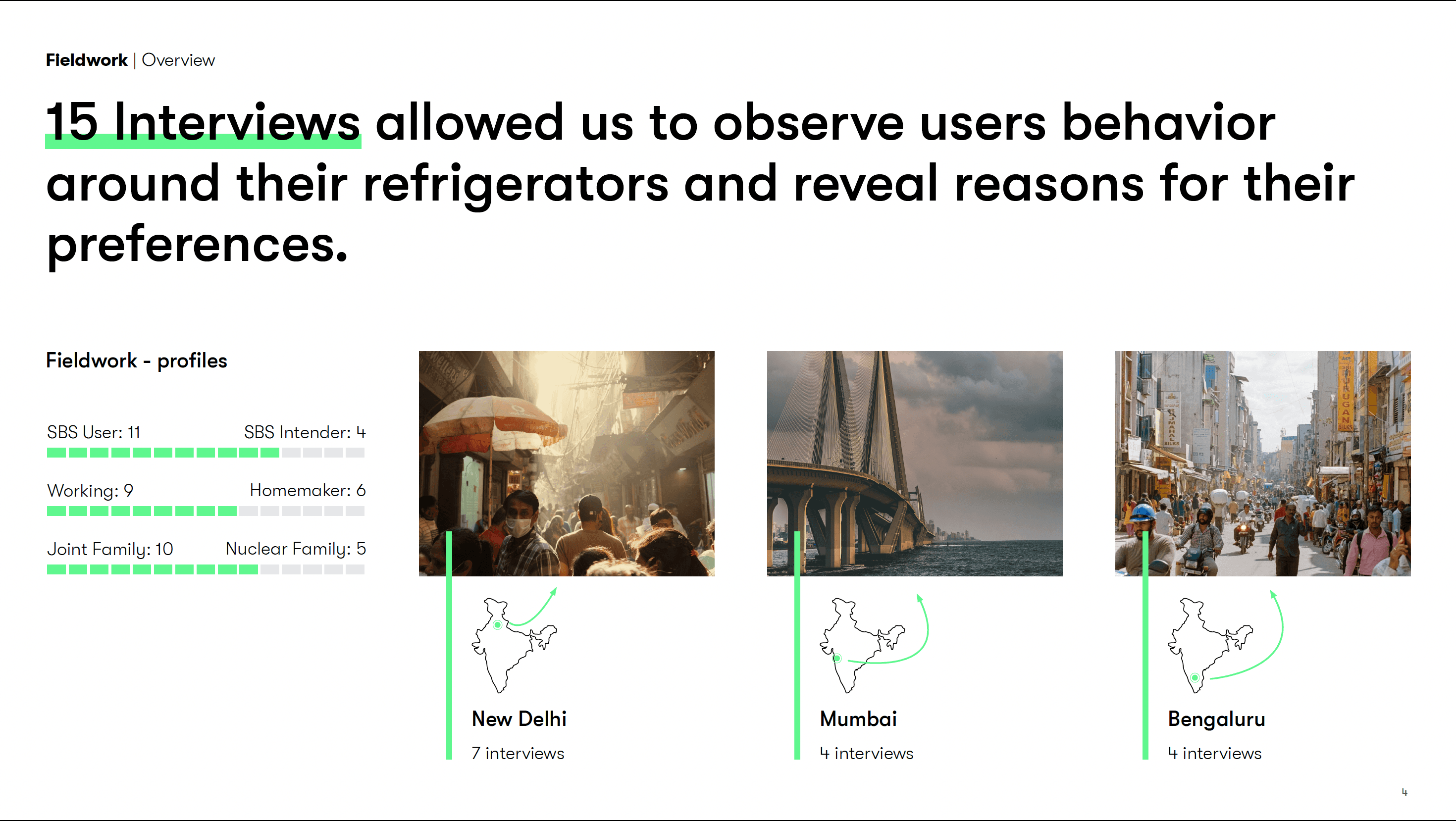
We spoke to a mix of current and potential Side-by-Side fridge users — across different household sizes, age groups, and income levels — to capture a broad range of needs, aspirations, and reactions.
Goals of the interview
Understand participants’ lifestyle and how they use their current refrigerator
Identify needs, desires, and pain points
Validate initial sacrificial concepts
Stage 3. Develop
Building on insights from user interviews and field research, we explored multiple approaches to address the core needs identified.
What we did
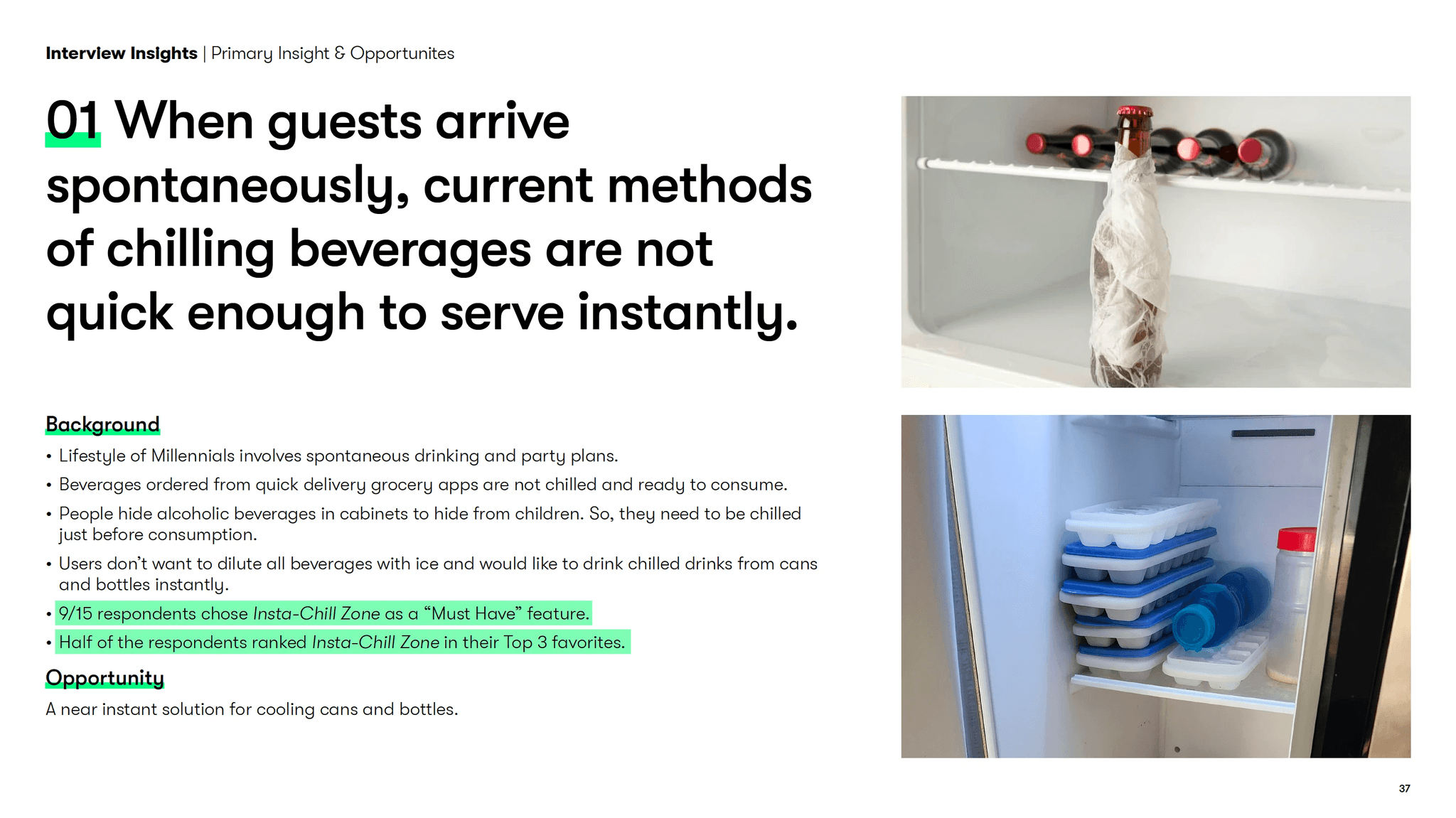
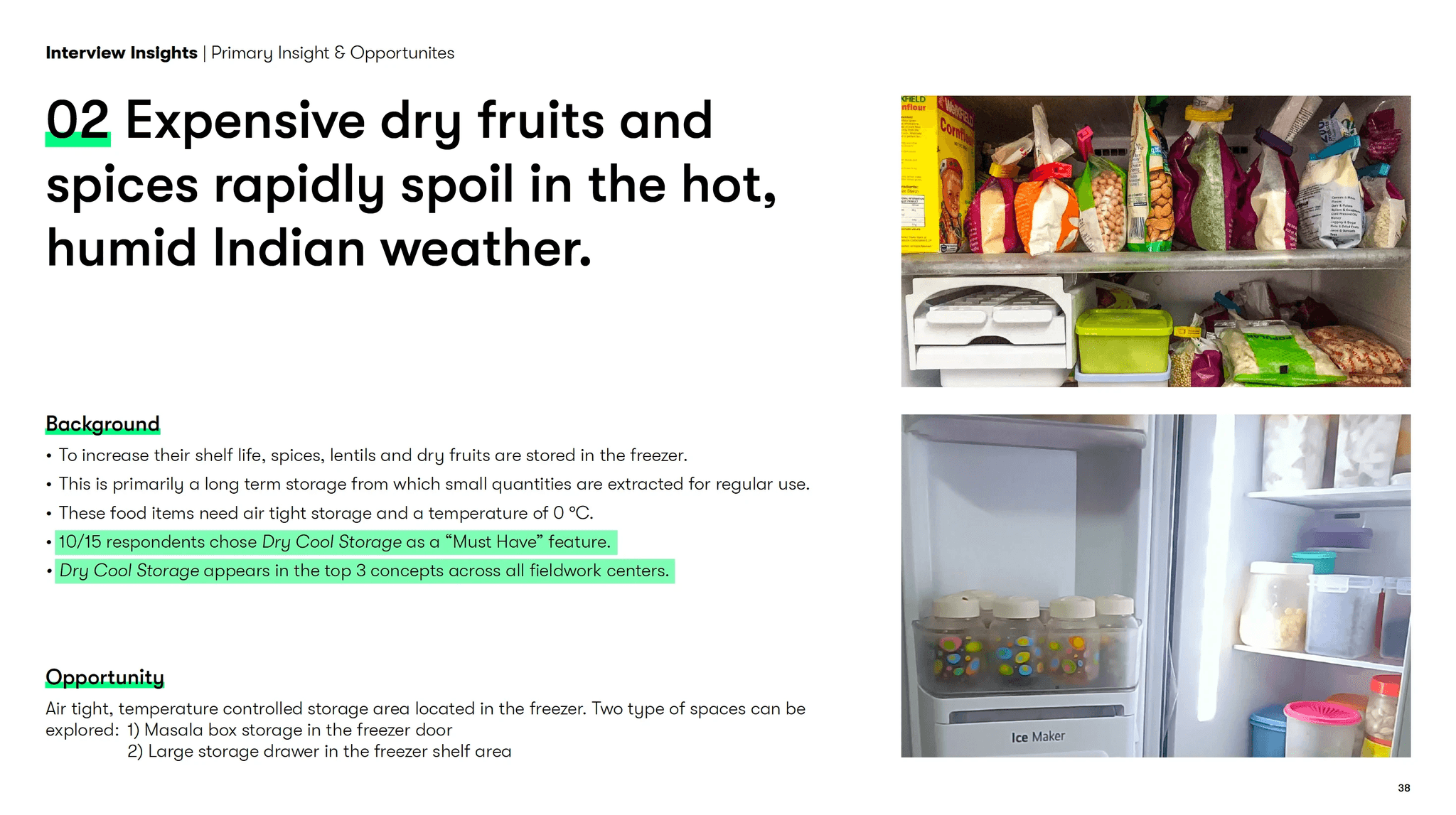
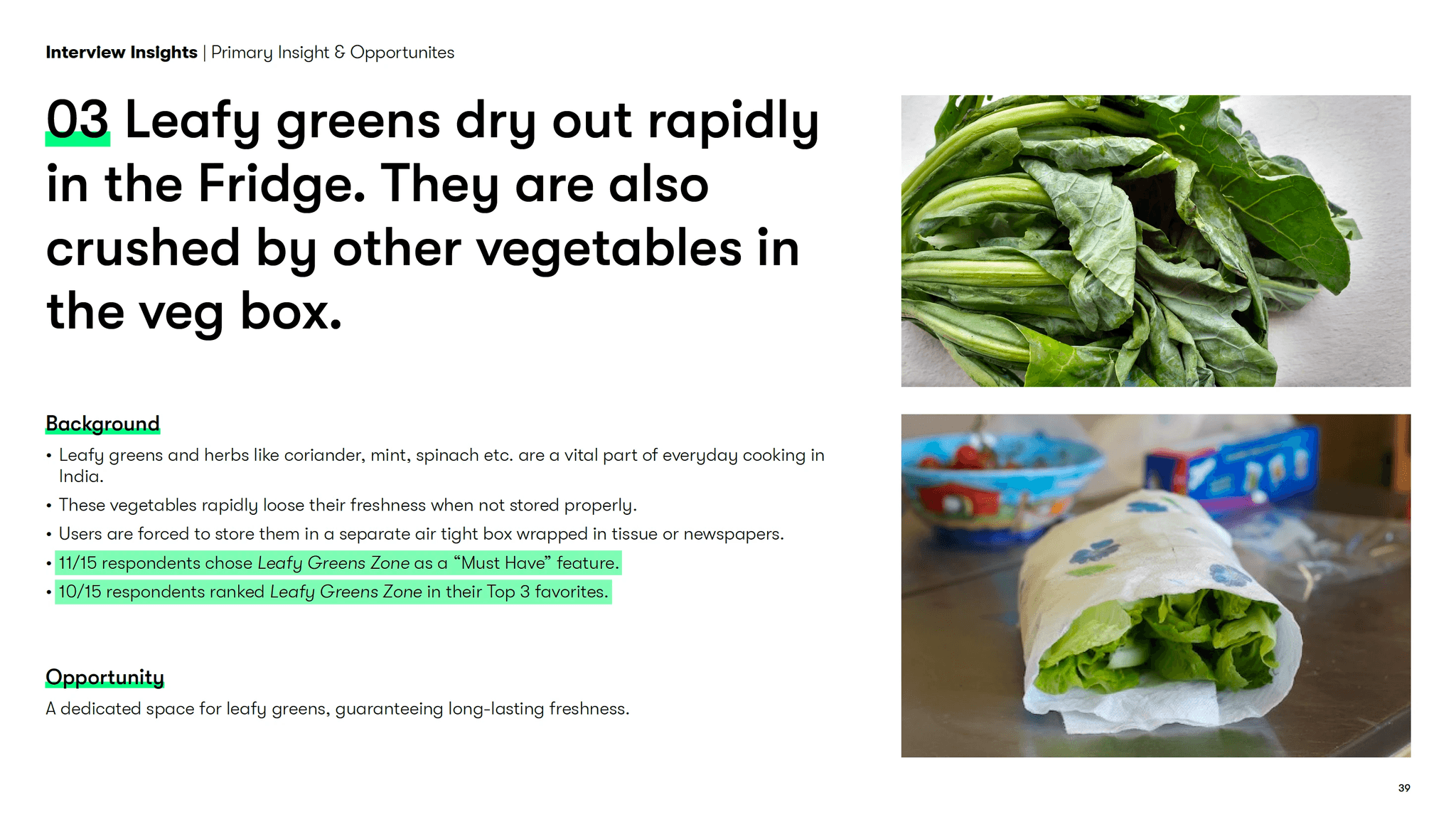
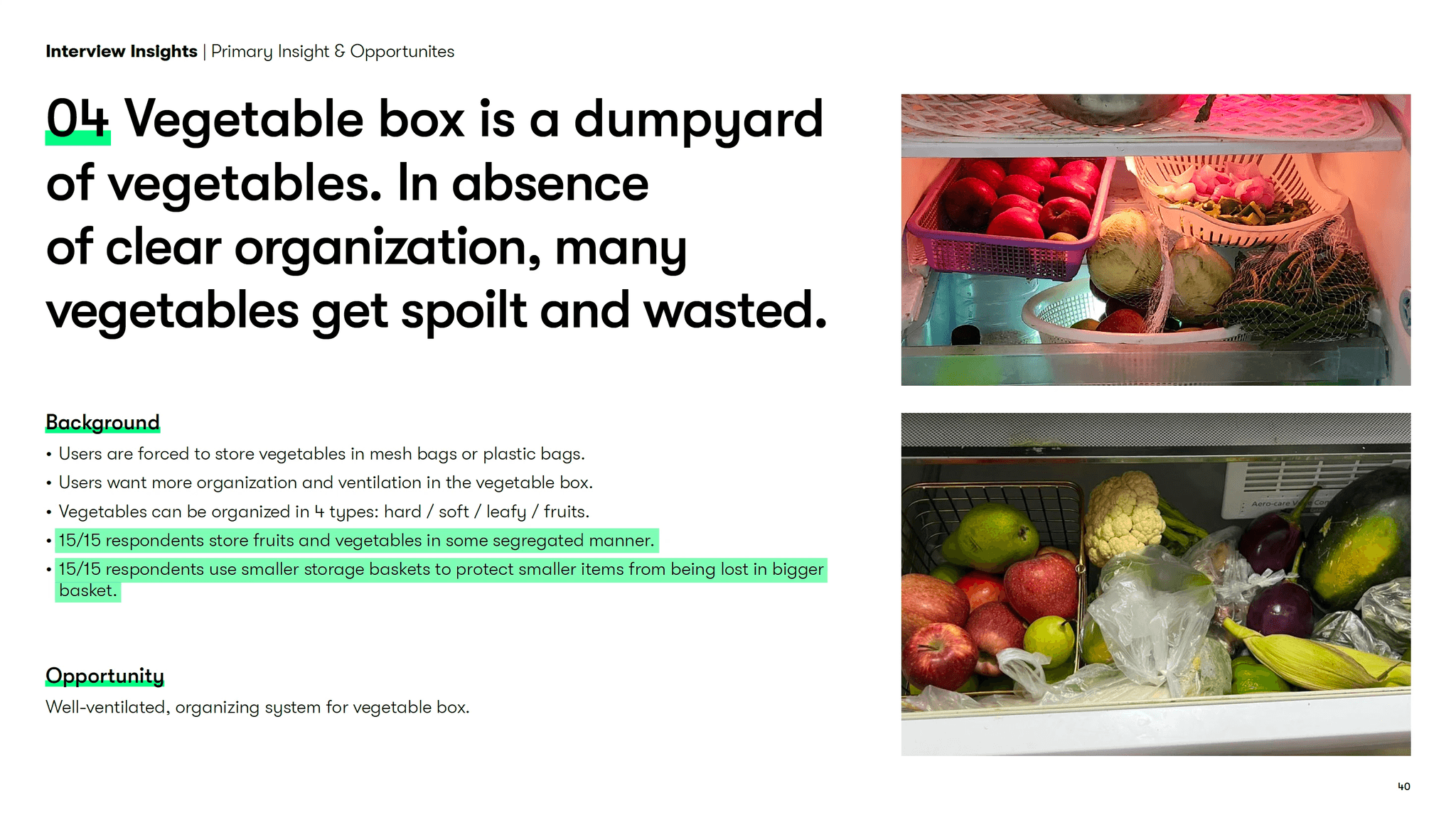
Analysed feedback from interviews to identify which ideas resonated most and why
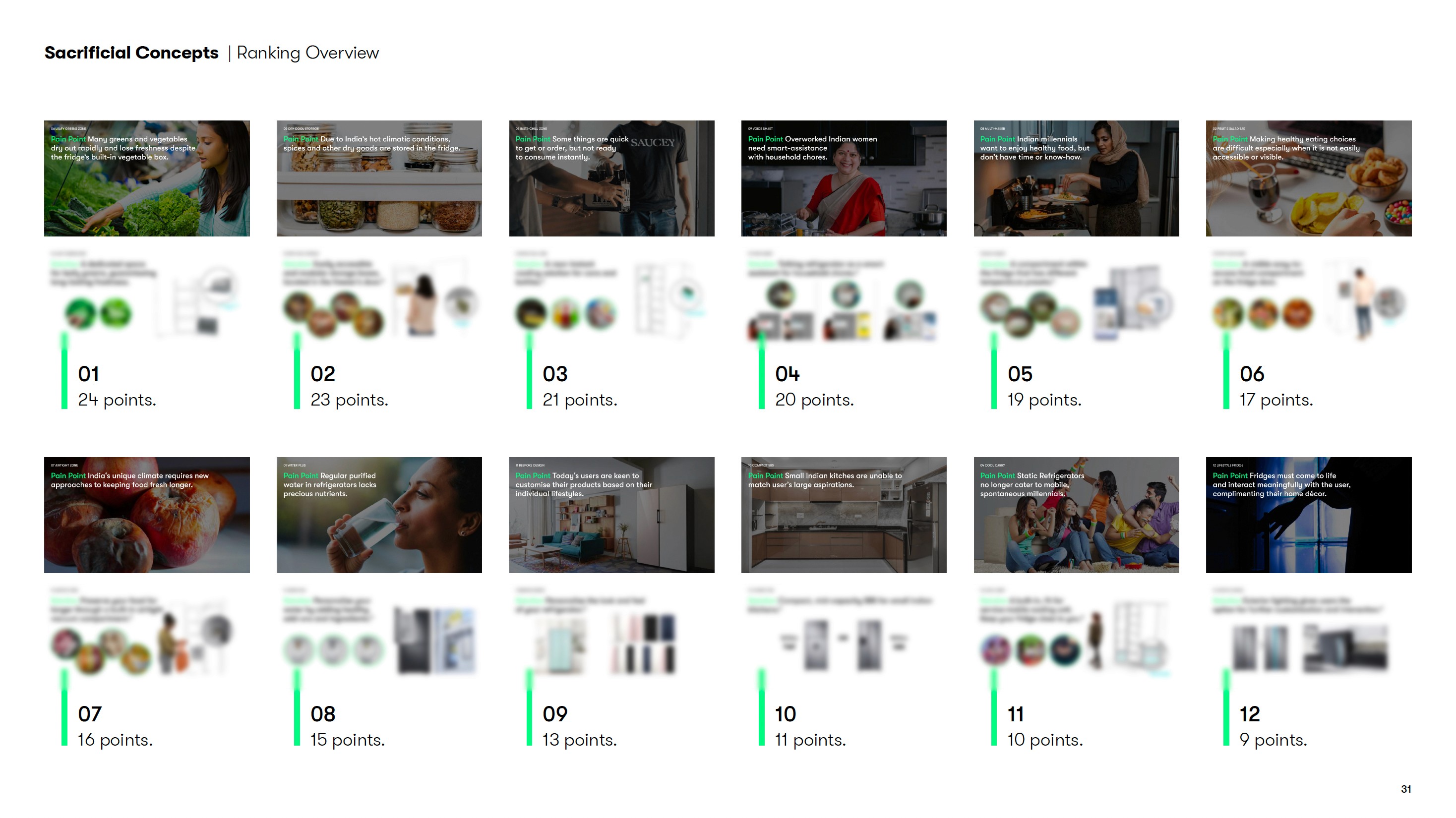
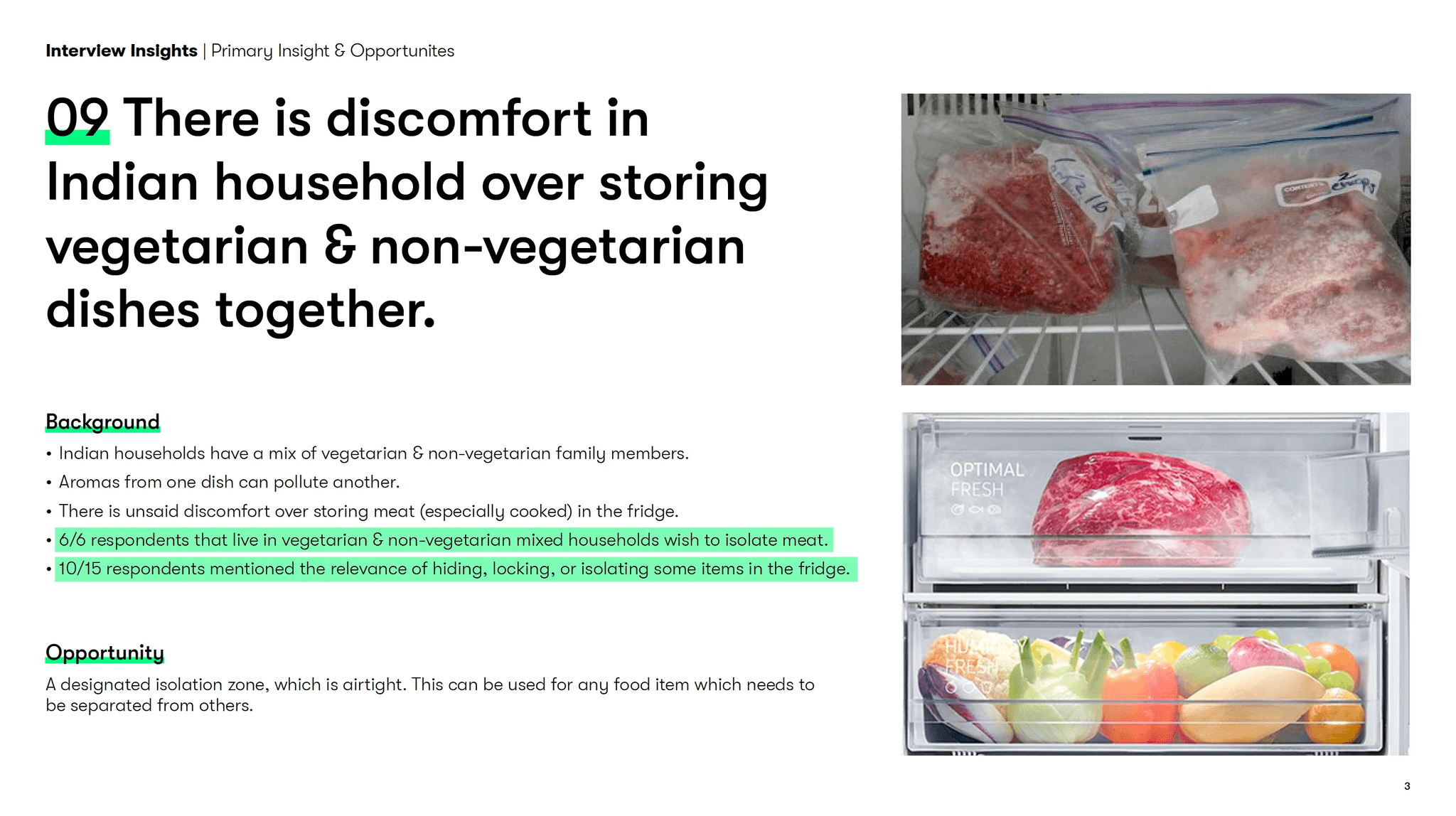
Revisited the 12 sacrificial concepts, remixing and combining them with new suggestions from users
Sketched and discussed low-fidelity variations to test “what if” scenarios without heavy investment
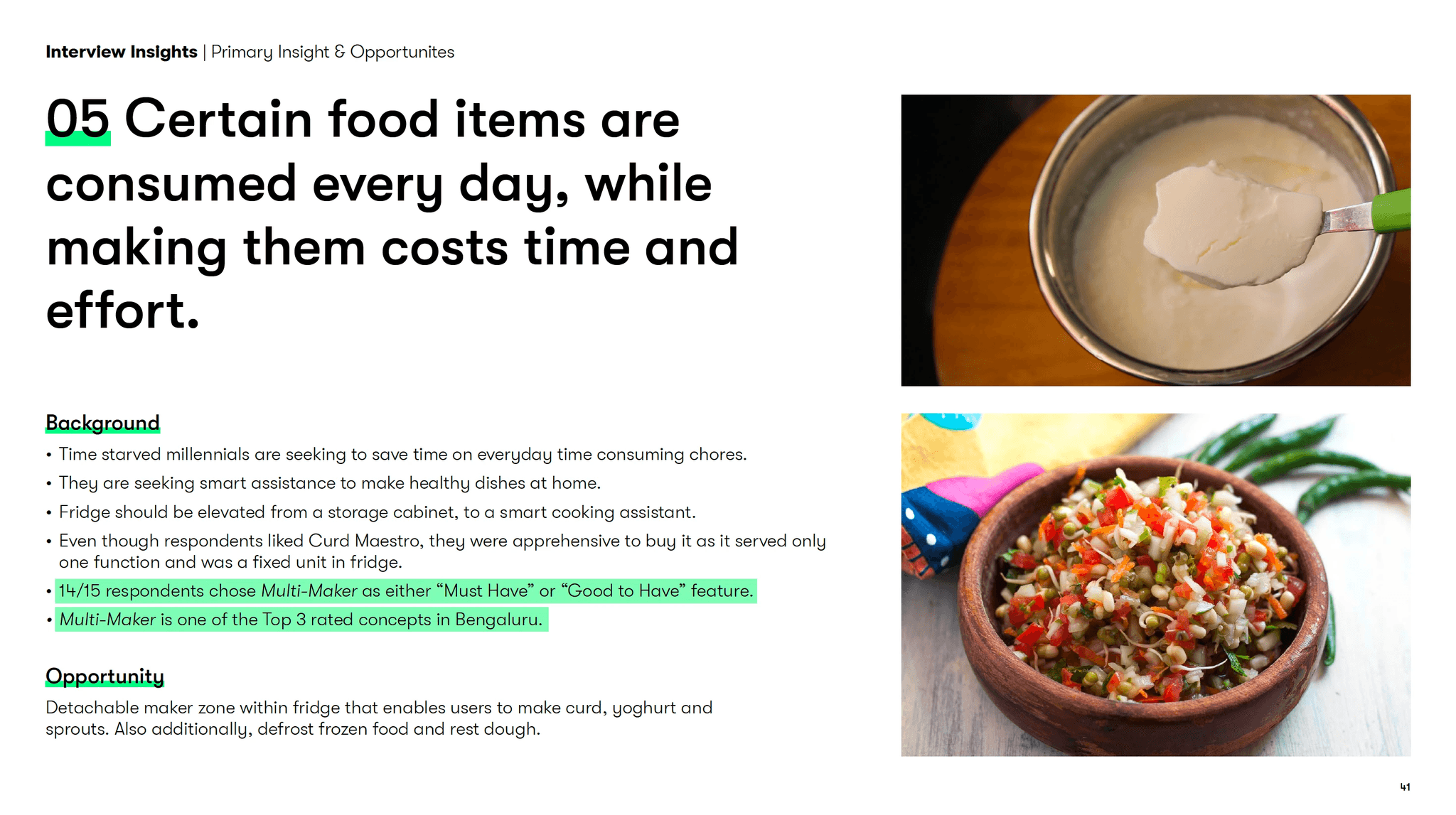
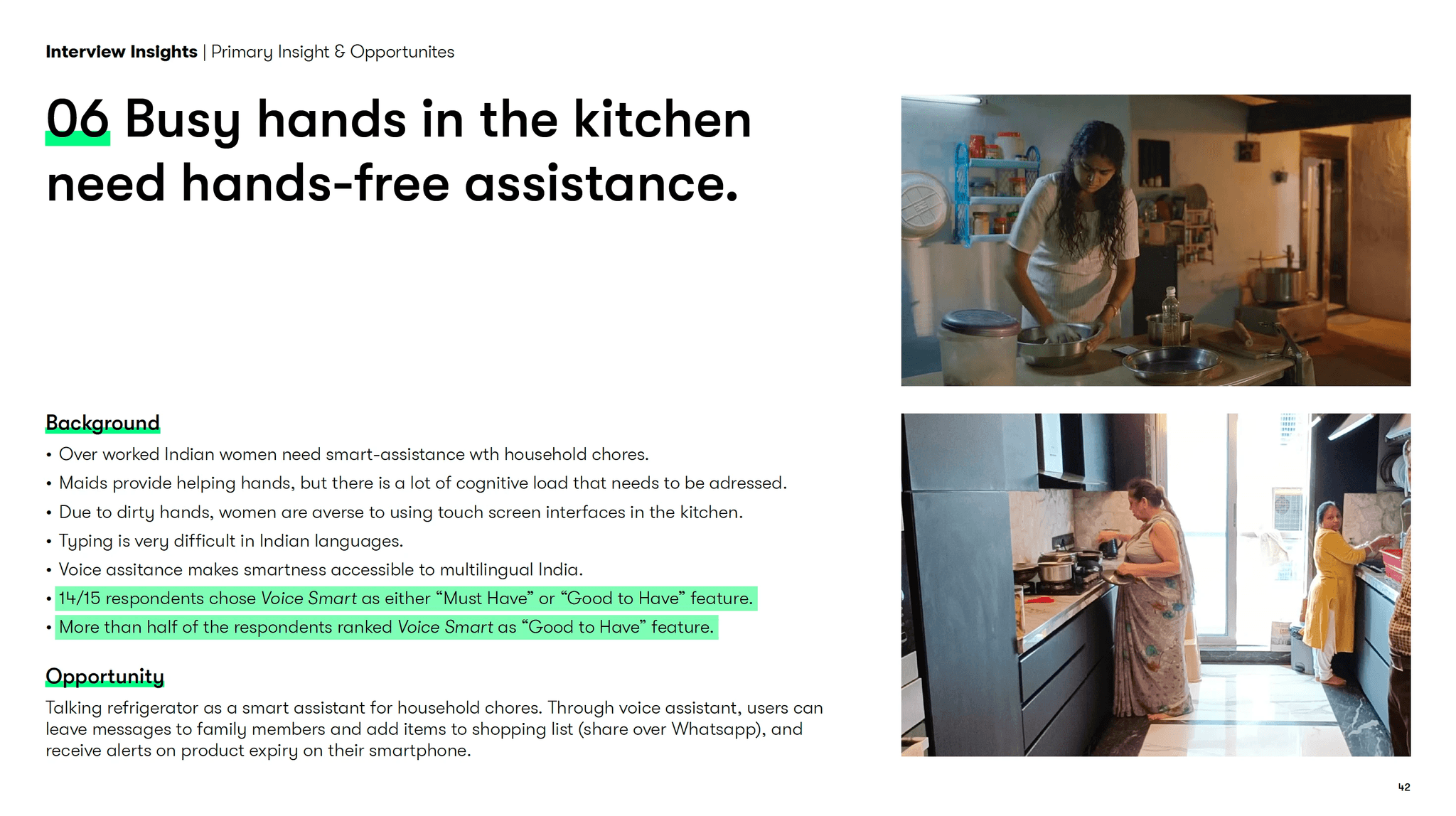
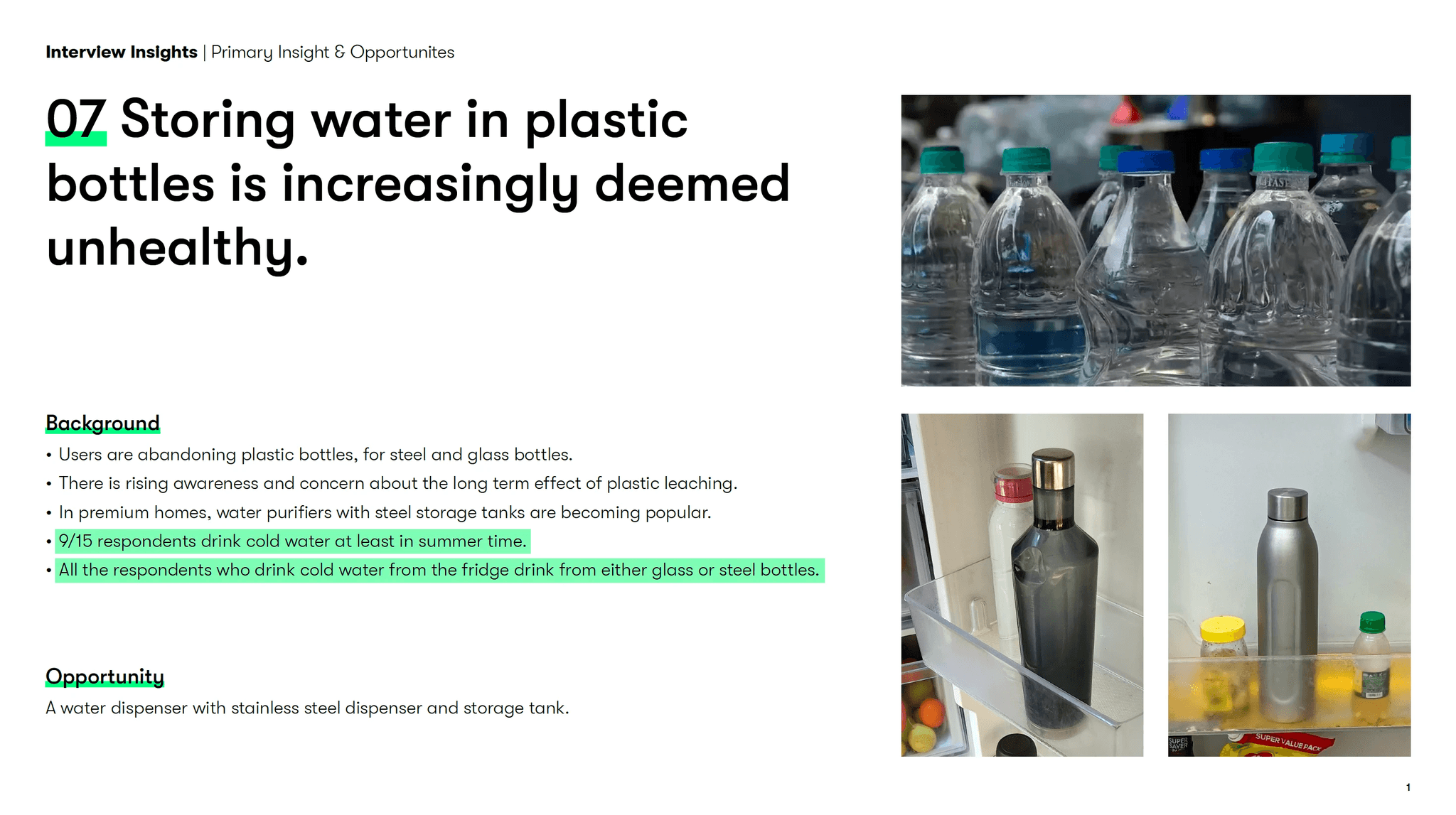
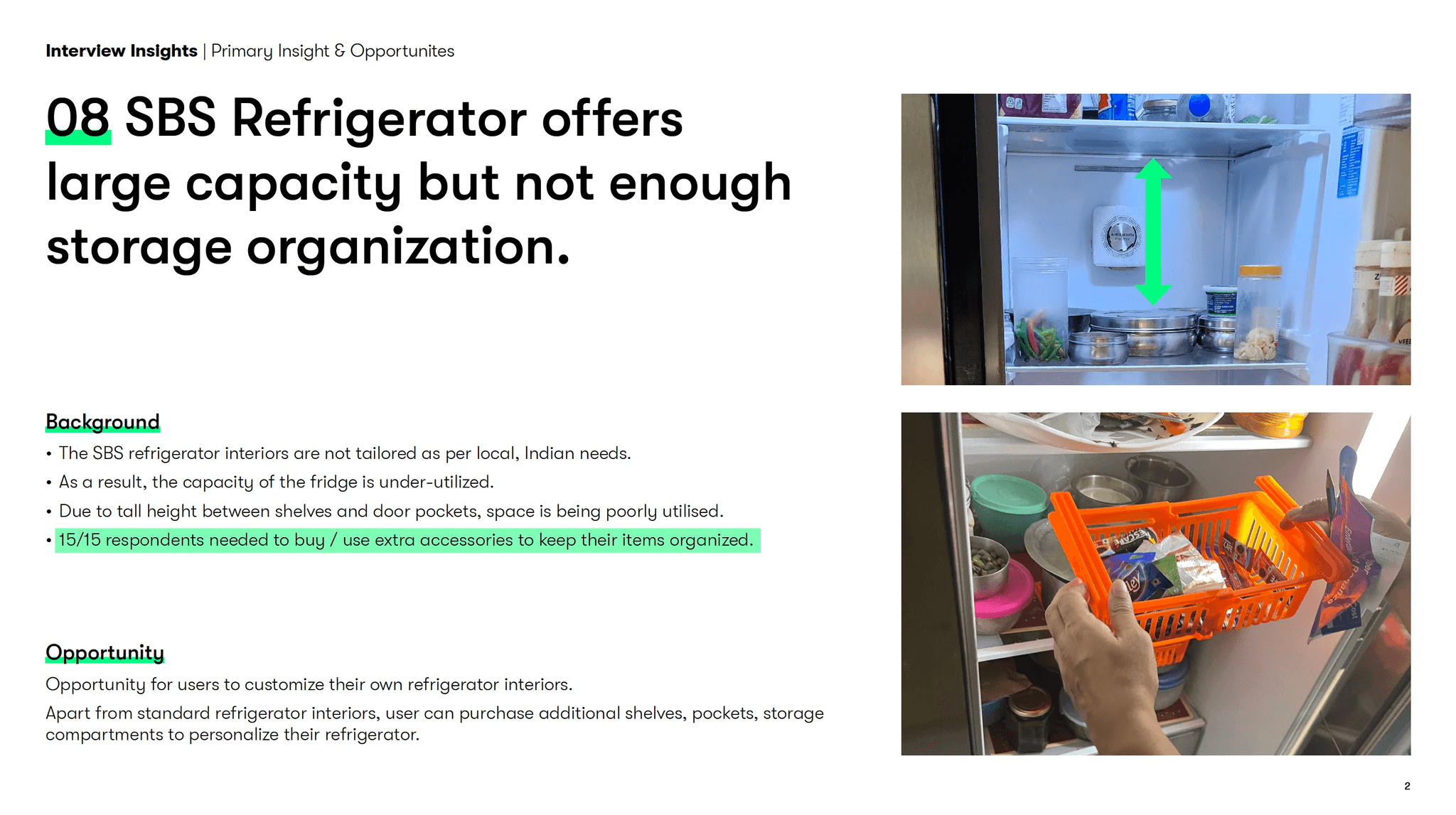
Stage 4. Deliver
Refined and shortlisted ideas resulted in three final feature concepts optimized for the Indian premium refrigerator segment with minimal manufacturing impact.
What we did
Shortlisted concepts using a weighted voting and feasibility scoring system
Assessed each idea for user value, technical feasibility, and alignment with brand positioning
Finalised three feature concepts for development, keeping in mind the goal of low manufacturing impact and high relevance to the Indian premium refrigerator segment
The selected concepts were handed over for 3D rendering and internal review




Reflection
My Role
Core design team (2 people). Contributed across research, synthesis, ideation, and concept refinement. Supported by additional designers during peak phases; external agency conducted user interviews.
My Impact
Being Indian in a European design team helped me bring cultural context and interpret subtle lifestyle nuances of the target users, which shaped more grounded insights and concept directions.